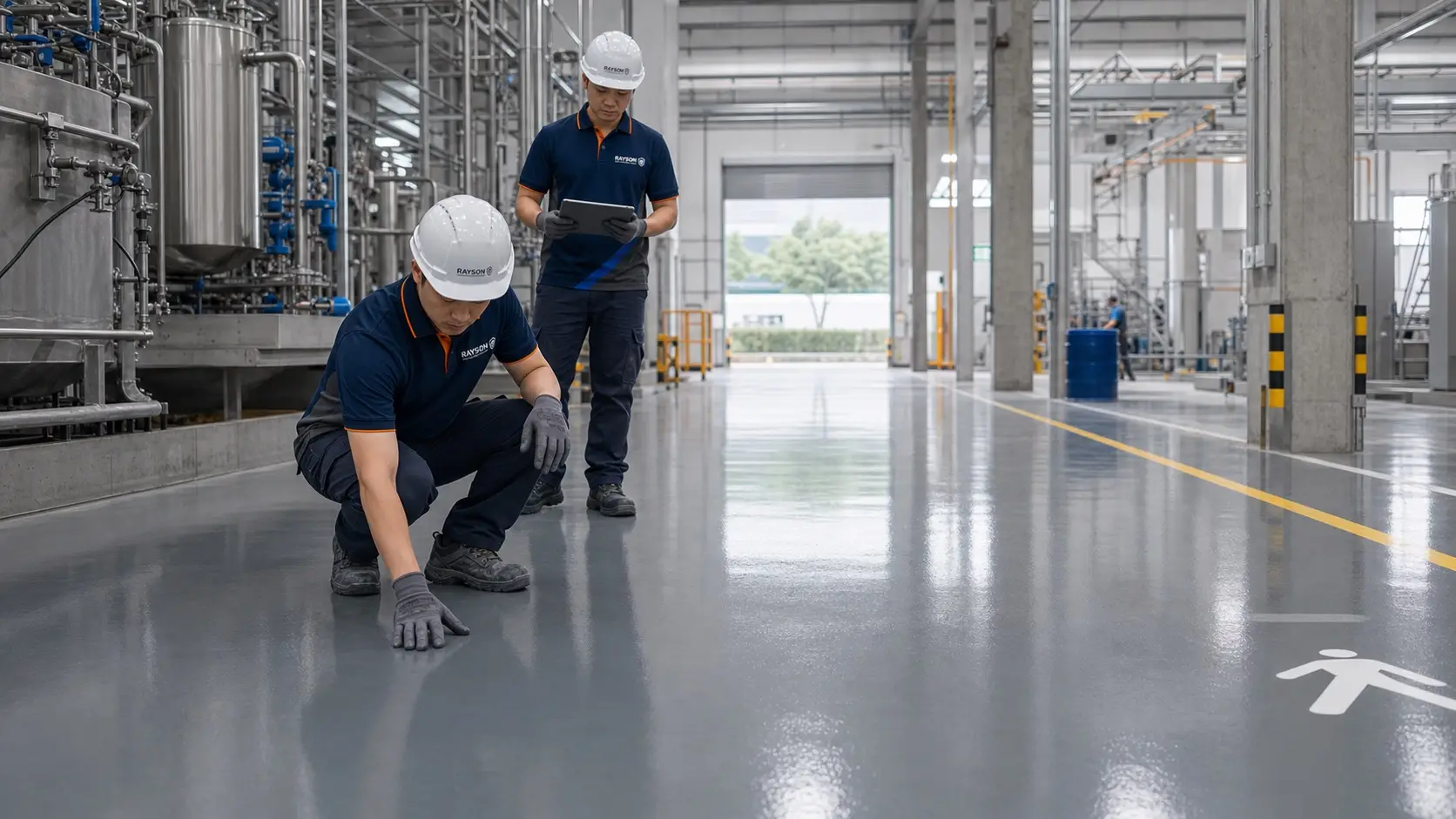
Foot traffic wears a floor coating. Forklifts attack it. A loaded truck puts its weight through small, hard wheels; it brakes and turns on the same few square metres of aisle hundreds of times a day; and at the dock it adds impact from plates, pallets and dropped corners. Coatings that would last a decade in a showroom fail in months on a busy aisle — not because the resin was bad, but because the specification never matched the truck.
The three loads that matter
- Point load. Weight over a small hard wheel is a different duty from the same weight on foot. It finds every weak spot in the concrete beneath the coating — the coating is only ever as strong as what it is bonded to.
- Shear. Tight turning and braking twist the surface. This is what strips under-bonded coatings along wheel tracks and at aisle intersections.
- Impact. Dock levellers, dragged pallets, dropped goods and racking strikes chip edges and joints first, then let damage spread.
Specify by zone, like traffic engineers do
Map the warehouse the way the trucks actually use it:
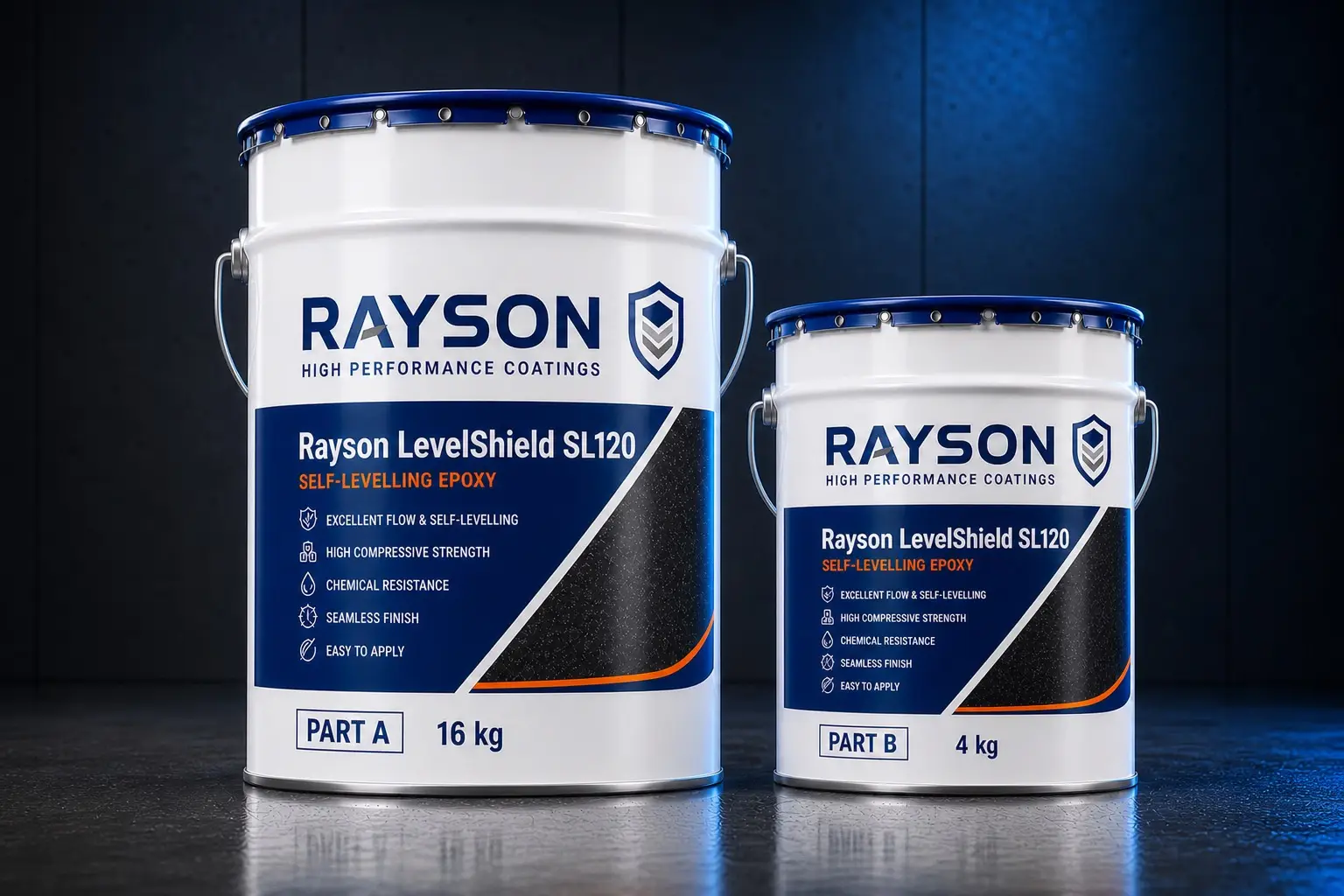
- Main running aisles and dock aprons — the heavy-duty zones. A self-levelling epoxy body such as Rayson LevelShield SL120 gives the build and the seamless wearing surface this traffic needs, over sound, mechanically prepared concrete.
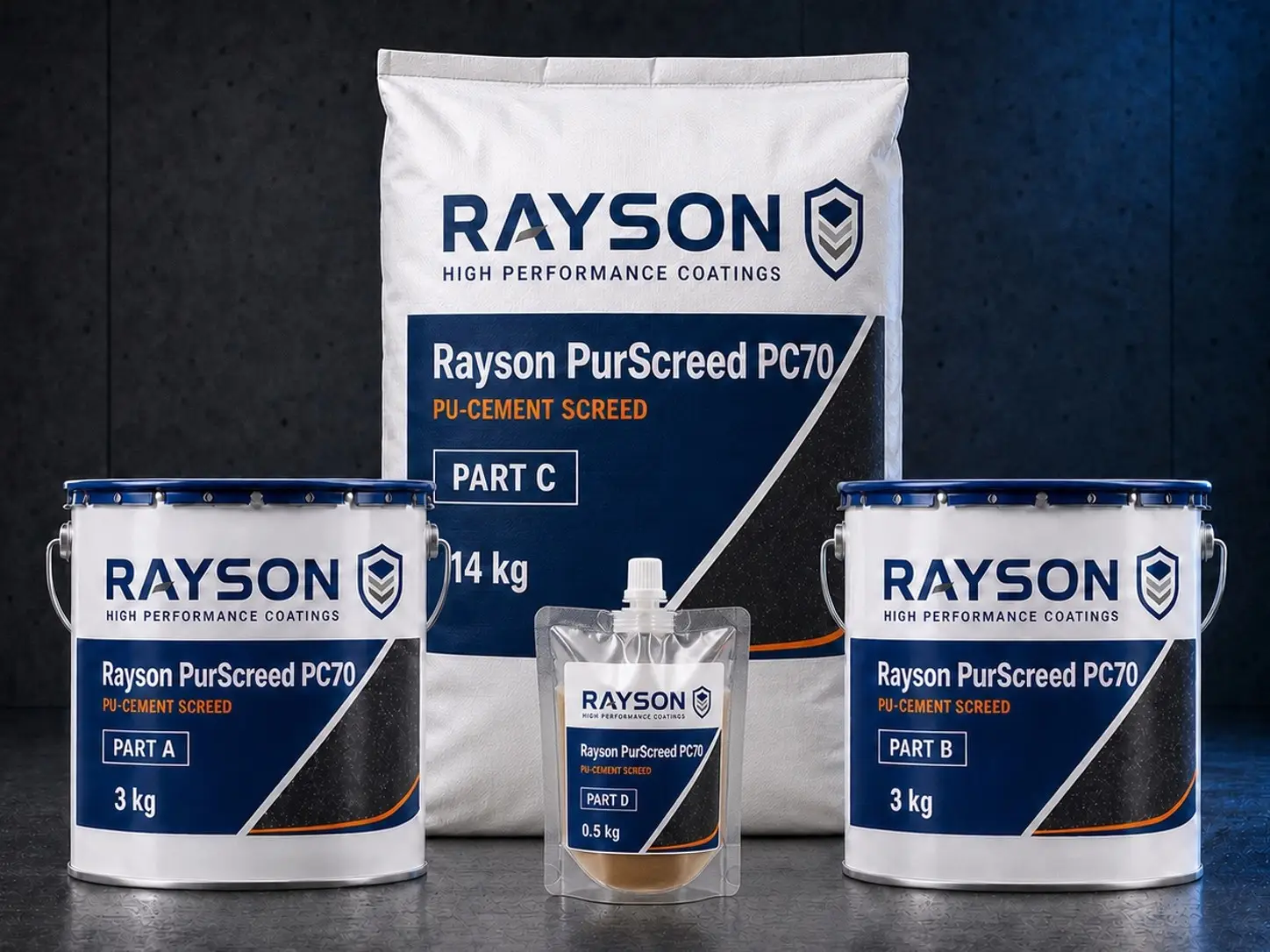
- Impact and wet-process zones — battery charging, washdown, workshops. Here a polyurethane-cement screed such as Rayson PurScreed PC70 adds impact tolerance and chemical/thermal robustness that resin films cannot match.
- Storage bays under racking — static point loads; the substrate and any repairs matter more than film thickness.
- Perimeters, offices, light corridors — where a simpler coating does the job at a fraction of the cost. Spending the budget where the trucks are is the whole discipline.
Fix the concrete before coating anything
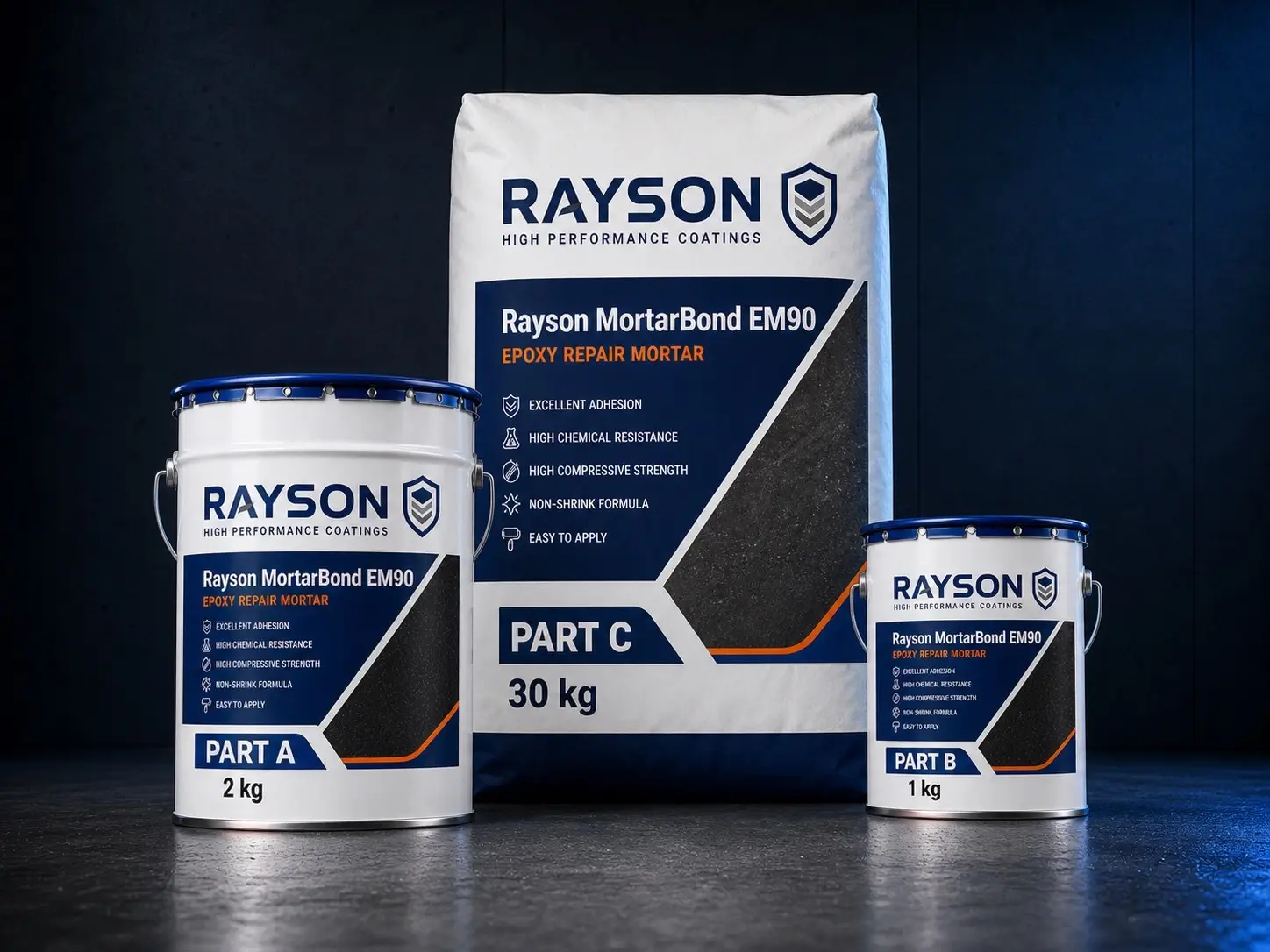
Most “coating failures” under forklifts are substrate failures wearing a coating costume. Weak, dusty or cracked concrete, spalled joint edges and broken arrises must be cut out and reinstated — an epoxy repair mortar such as Rayson MortarBond EM90 rebuilds damaged sections and edges so the new floor has something worth bonding to. Coating over damage does not repair it; it just hides it until the truck finds it.
Keeping the warehouse running
Few operations can hand over the whole floor at once. The usual answer is phased work: section by section, overnight and weekend windows, with traffic diverted around fresh areas until they have genuinely cured. The single most expensive shortcut in warehouse flooring is reopening a lane early — a half-cured floor under a loaded truck fails immediately and the rework costs more than the patience would have.
For matching systems to traffic class in more detail, see choosing a warehouse floor coating by traffic class.