Rayson LevelShield SL120
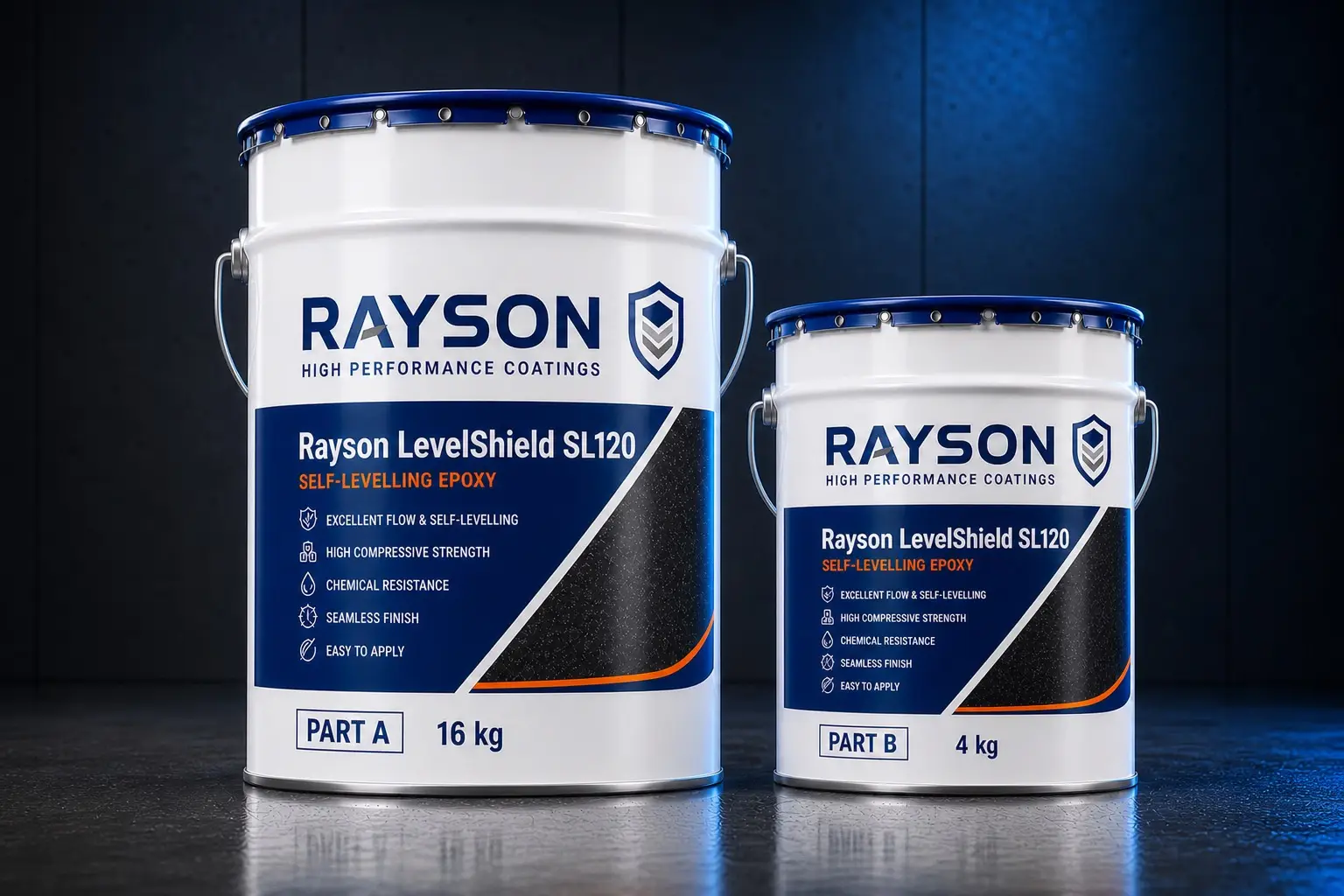
Rayson LevelShield SL120 is a solvent-free, two-component, self-smoothing epoxy floor system that delivers a seamless wearing surface with medium to heavy chemical resistance and high mechanical strength.
View product
Epoxy is the default resin for Singapore's industrial and commercial floors: hard-wearing, chemically resistant, seamless and economical. It comes in three practical forms — thin roller-applied coatings, self-levelling floors for forklift traffic, and water-based low-odour versions for occupied buildings — and it has one honest limitation: standard epoxy yellows under UV, so exposed areas need a polyurethane finish. Rayson manufactures all three forms locally with open technical data sheets.
| Epoxy | Polyurethane (PU) | PU-cement | |
|---|---|---|---|
| Hardness / compressive strength | High | Moderate–high, more flexible | Very high |
| Abrasion resistance | Good | Excellent | Excellent |
| Chemical resistance | Very good | Good | Excellent incl. organic acids |
| UV stability | Poor (yellows) | Excellent (aliphatic) | Poor–moderate |
| Thermal shock / hot wash-down | Limited | Limited | Excellent |
| Relative cost | $ | $$ | $$$ |
| Typical role | Primers & body coats indoors | Finishes, exteriors | F&B / chemical screeds |
Full plain-language guide: how to select a coating system. For PU and PU-cement detail, see PU flooring in Singapore.
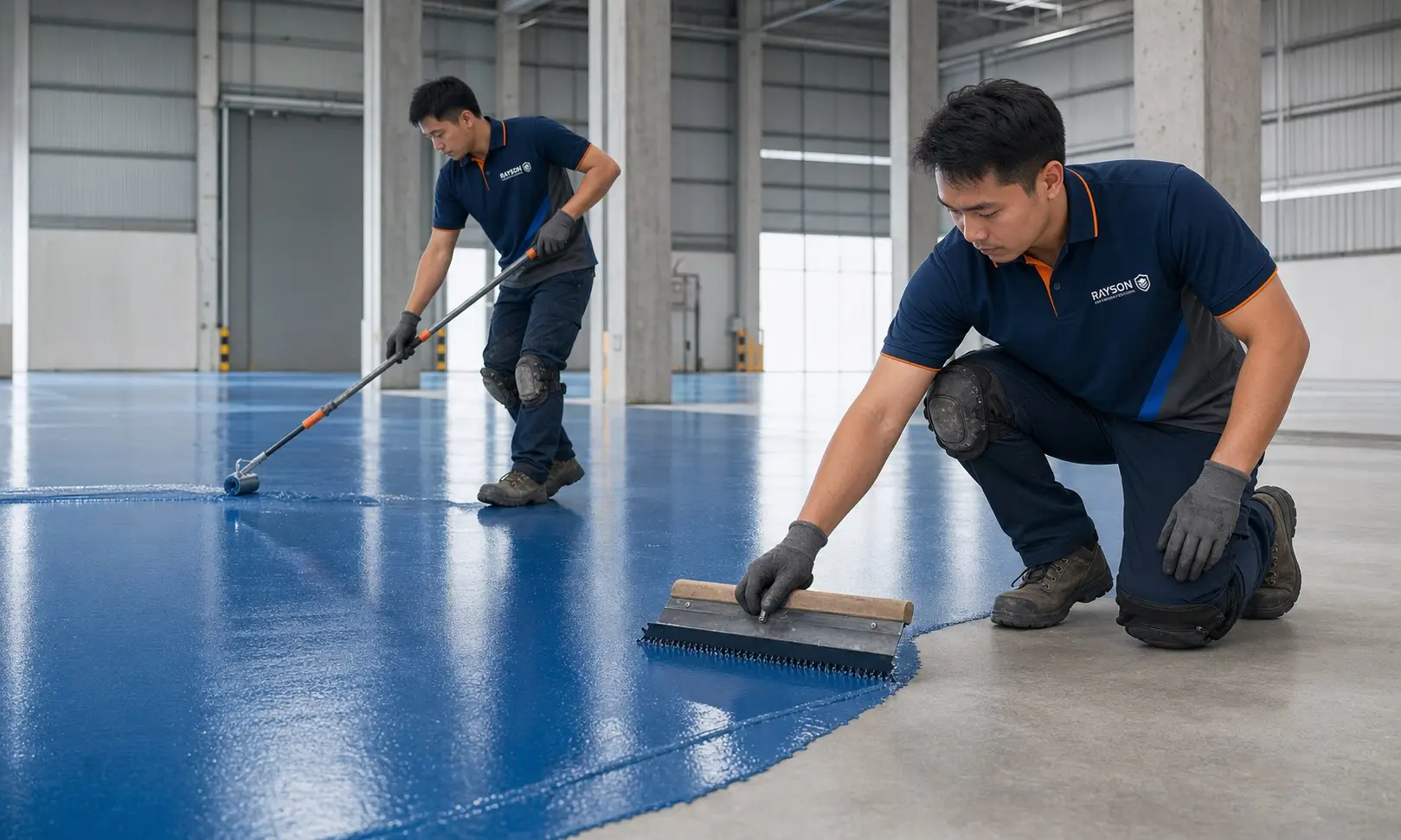
LevelShield SL120 flows into a seamless, level wearing surface for production floors, warehouses and clean environments, over PrimeBond E20 primer. This is the standard answer for forklift traffic.
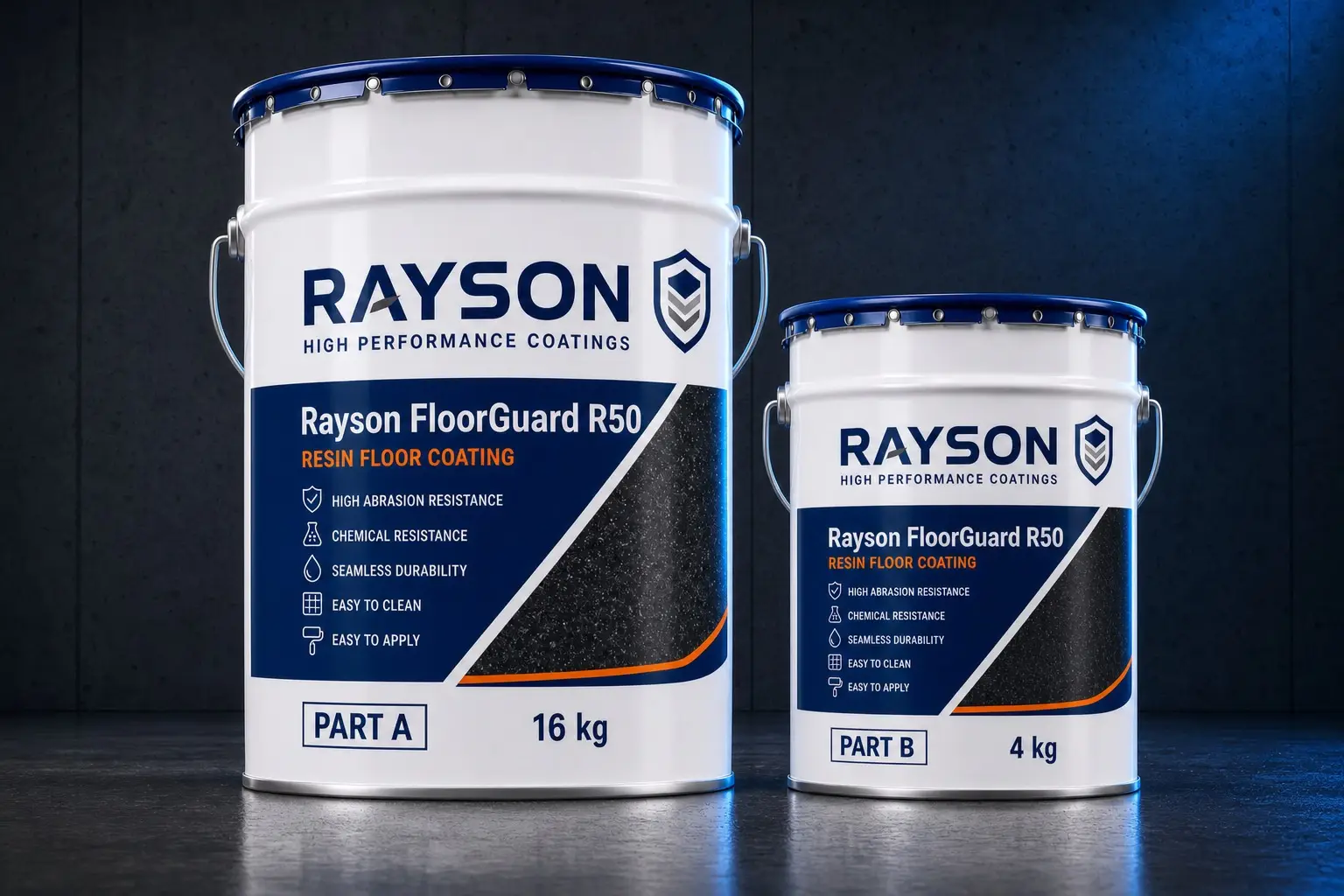
FloorGuard R50 puts a hard, cleanable film on lighter-duty floors — stores, plant rooms, corridors — and refreshes tired concrete at a sensible cost.
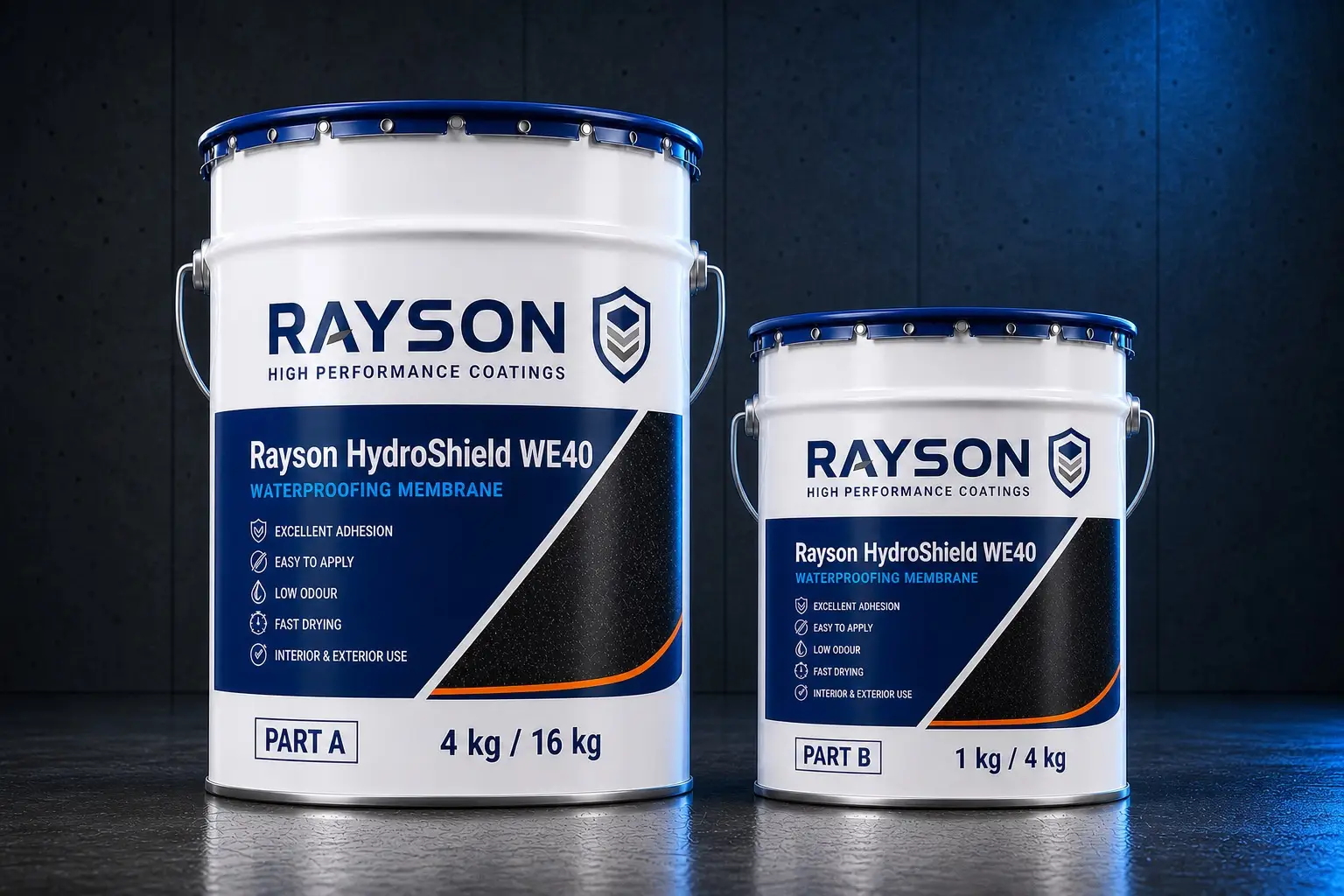
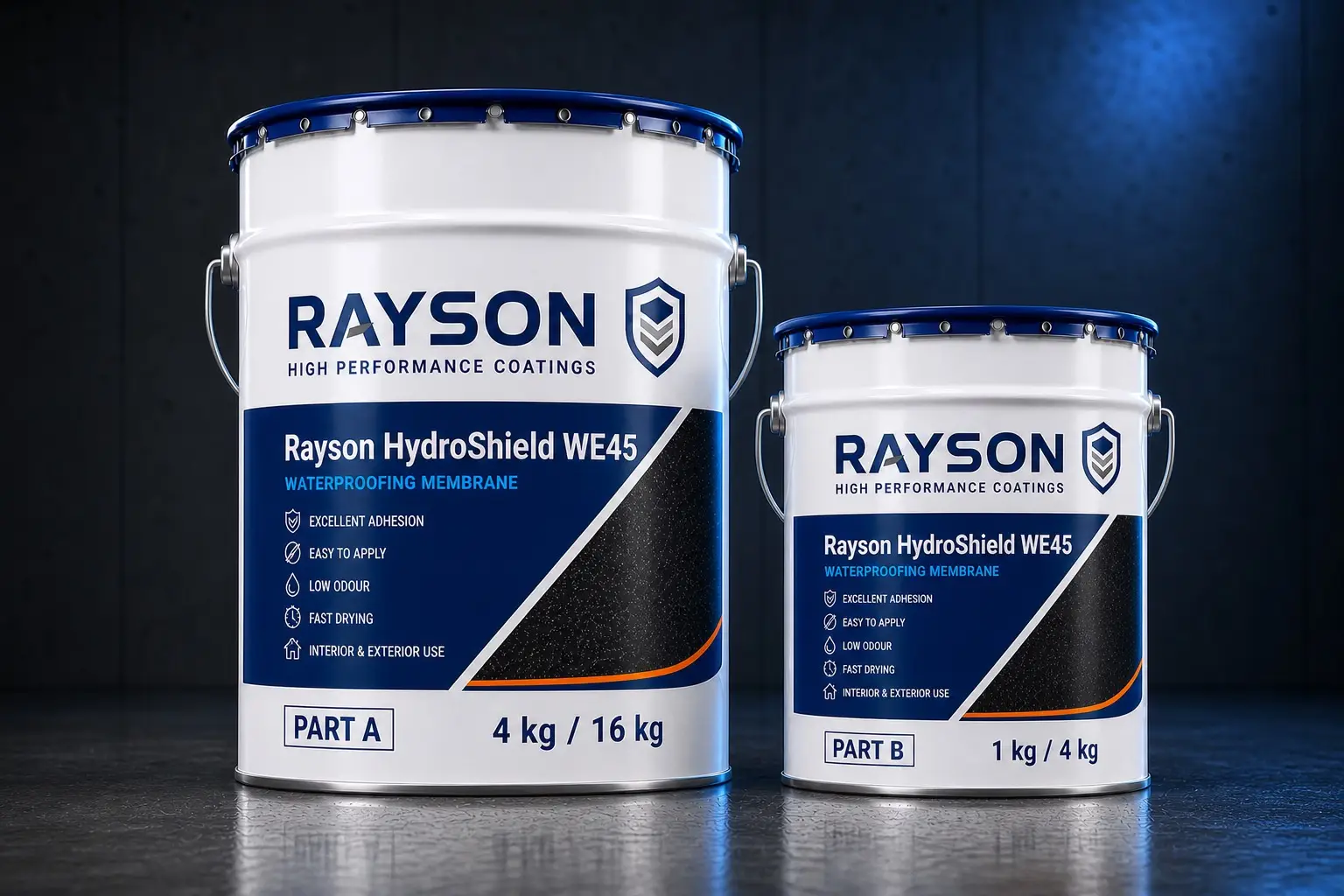
HydroShield WE40 and WE45 apply with low odour, making them the choice for schools, offices and retail where work happens overnight around people.
Rayson LevelShield SL120 is a solvent-free, two-component, self-smoothing epoxy floor system that delivers a seamless wearing surface with medium to heavy chemical resistance and high mechanical strength.
View product
Rayson FloorGuard R50 is a two-component, solvent-free high-solids epoxy floor coating that cures to a smooth gloss — or a slip-resistant finish when broadcast with aggregate — for concrete and screed under normal to medium-heavy wear.
View product
Rayson HydroShield WE40 is a two-component, water-based epoxy used as a self-priming primer-and-topcoat system on concrete, screed, asphalt and metal — including damp surfaces.
View product
Rayson HydroShield WE45 is a two-component, water-based epoxy primer-and-topcoat system for concrete, screed, asphalt and metal — covering duties from warehouse floors to rubbish chute coatings.
View product
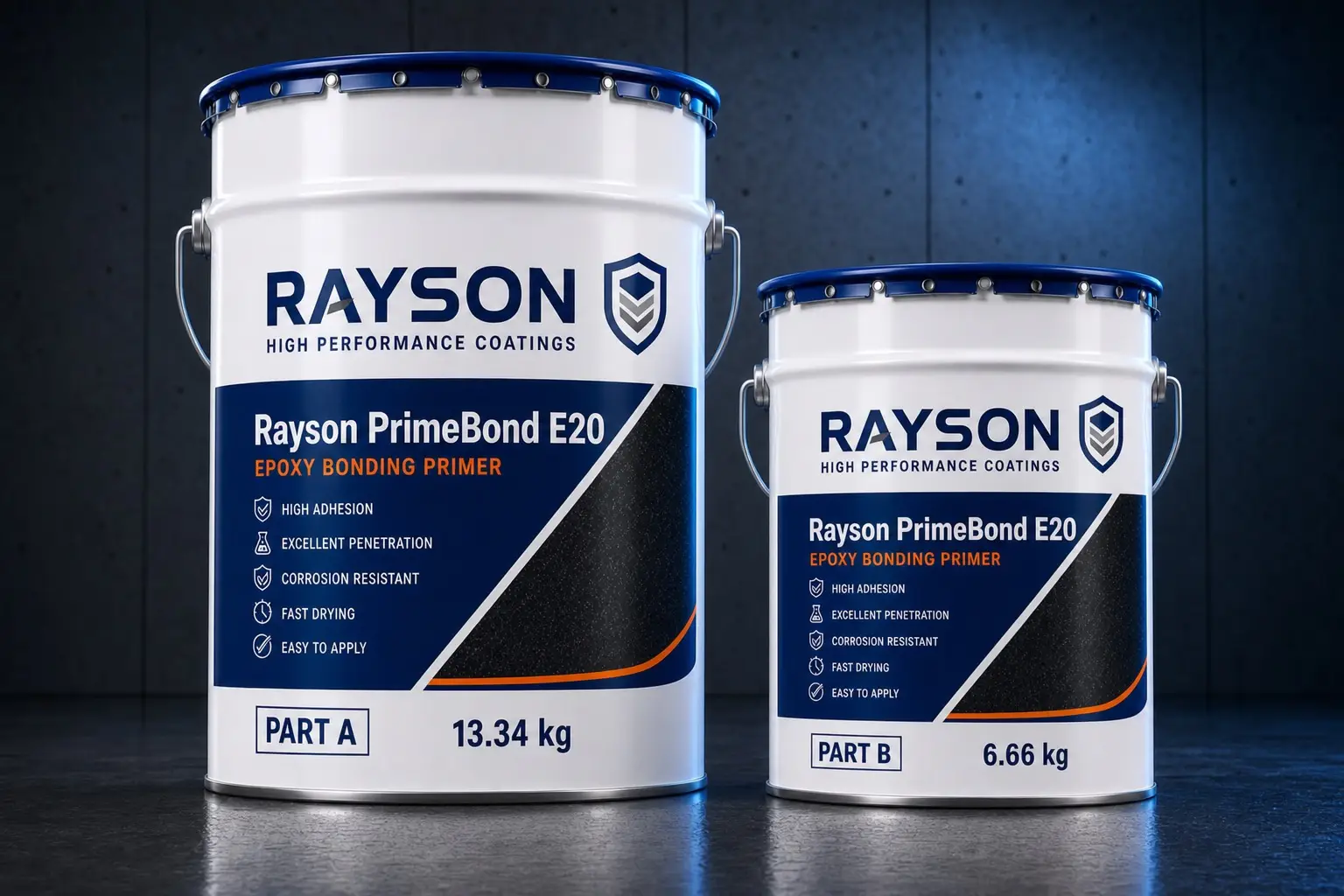
Rayson PrimeBond E20 is a two-component, medium-viscosity, solvent-free epoxy bonding primer that anchors resin floor systems to concrete, screed, asphalt and prepared metal — on dry or damp substrates.
View product
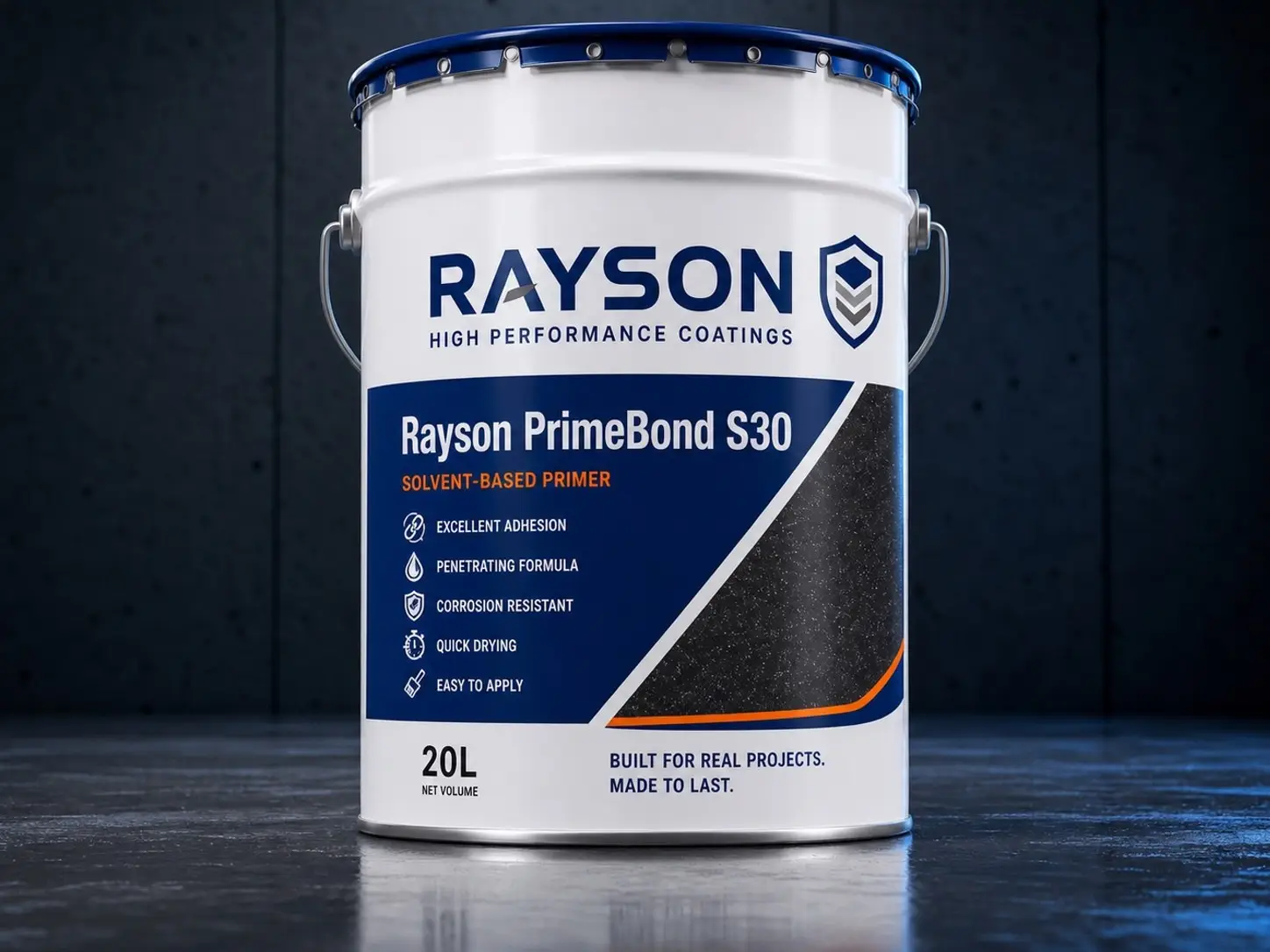
Rayson PrimeBond S30 is a two-part, low-viscosity, solvent-based epoxy primer that penetrates and seals prepared concrete, pavements and mineral substrates before coating.
View productThe Singapore-specific pitfalls are moisture and programme. Ground-bearing slabs hold moisture year-round — test before coating and use damp-tolerant priming where readings are marginal. Heat shortens pot life, so mixing discipline matters more here than in temperate markets. And compressed night-work windows demand systems whose recoat timings actually fit your programme. The epoxy application guide covers the sequence; our team covers the judgement calls.
Answer four questions about your surface and conditions to shortlist suitable Rayson systems.
Find your systemEstimate material quantities from your floor area, coats and coverage rate.
Estimate quantitiesOpen technical data sheets for every Rayson product — no forms, no gating.
Open the libraryA properly specified and properly prepared epoxy floor typically serves for many years even under industrial traffic; thin roller coats wear faster than self-levelling systems. The two biggest factors are surface preparation quality and matching the build-up to the real traffic — not the brand of resin.
Standard epoxies yellow and chalk under UV, so for exposed decks and outdoor areas the usual answer is an epoxy or PU base sealed with a UV-stable aliphatic polyurethane finish such as Rayson UraForce. Interior floors are epoxy home ground.
Roller coats build thin films measured in hundreds of microns; self-levelling systems are thicker seamless layers; screeds go thicker still. More thickness means more mechanical capacity and cost — match it to traffic rather than defaulting to the thickest option. See each product TDS for its build.
Only with a damp-tolerant primer. Rayson PrimeBond E20 is formulated for dry or damp (not wet) substrates, which matters in Singapore where ground-bearing slabs rarely dry fully. Standing water or active ingress must be resolved first.
Epoxy is harder, more chemically resistant and more economical indoors; polyurethane is tougher against abrasion, more flexible and UV-stable. Many floors use both: an epoxy body coat with a PU finish. For thermal shock and hot wash-down, step up to PU-cement.
Solvent-free epoxies build thicker films and maximum performance; water-based epoxies are low-odour and easier to use in occupied buildings, at some cost in film build. Rayson HydroShield is the water-based line; LevelShield and FloorGuard are the solvent-free floor systems.
Tell us your surface, area and timeline — our Singapore technical team will recommend a practical system and price it fast.
Rayson assistant
Answers from Rayson's own product information
Guidance only — confirm specifications with the Rayson technical team.