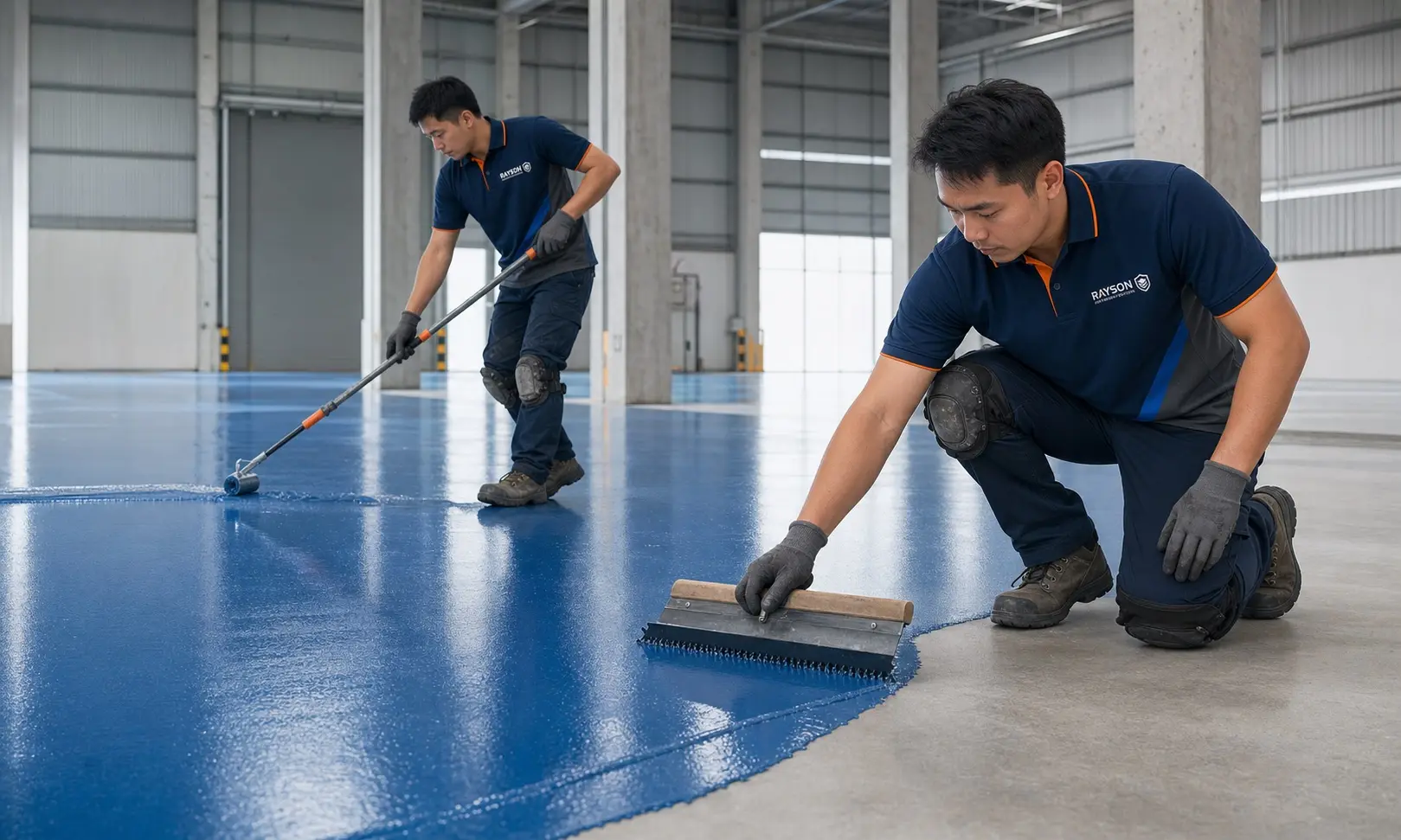
“Chemical-resistant flooring” is one of the most misused phrases in the coatings market, because it implies resistance is a yes/no property a product either has or lacks. It is not. Every resin chemistry resists some substances well, others conditionally, and a few not at all — and the same chemical can be harmless at 5% and ambient temperature, yet aggressive at 30% and 60 °C. A plant floor is specified honestly by matching real, named exposures to documented resistance — never by a brochure adjective.
Start with a spill map
Walk the process, area by area, and list what can actually reach the floor:
- process chemicals — with concentration and temperature, not just names;
- cleaning chemistry and washdown temperature — cleaning regimes attack floors as often as the process does;
- oils, fats and solvents from maintenance and materials handling;
- how long a spill realistically sits before cleanup in each area.
This one exercise turns a vague requirement (“chemical resistant”) into a checkable specification, and it is what a competent supplier will ask for anyway.
Matching chemistry to exposure
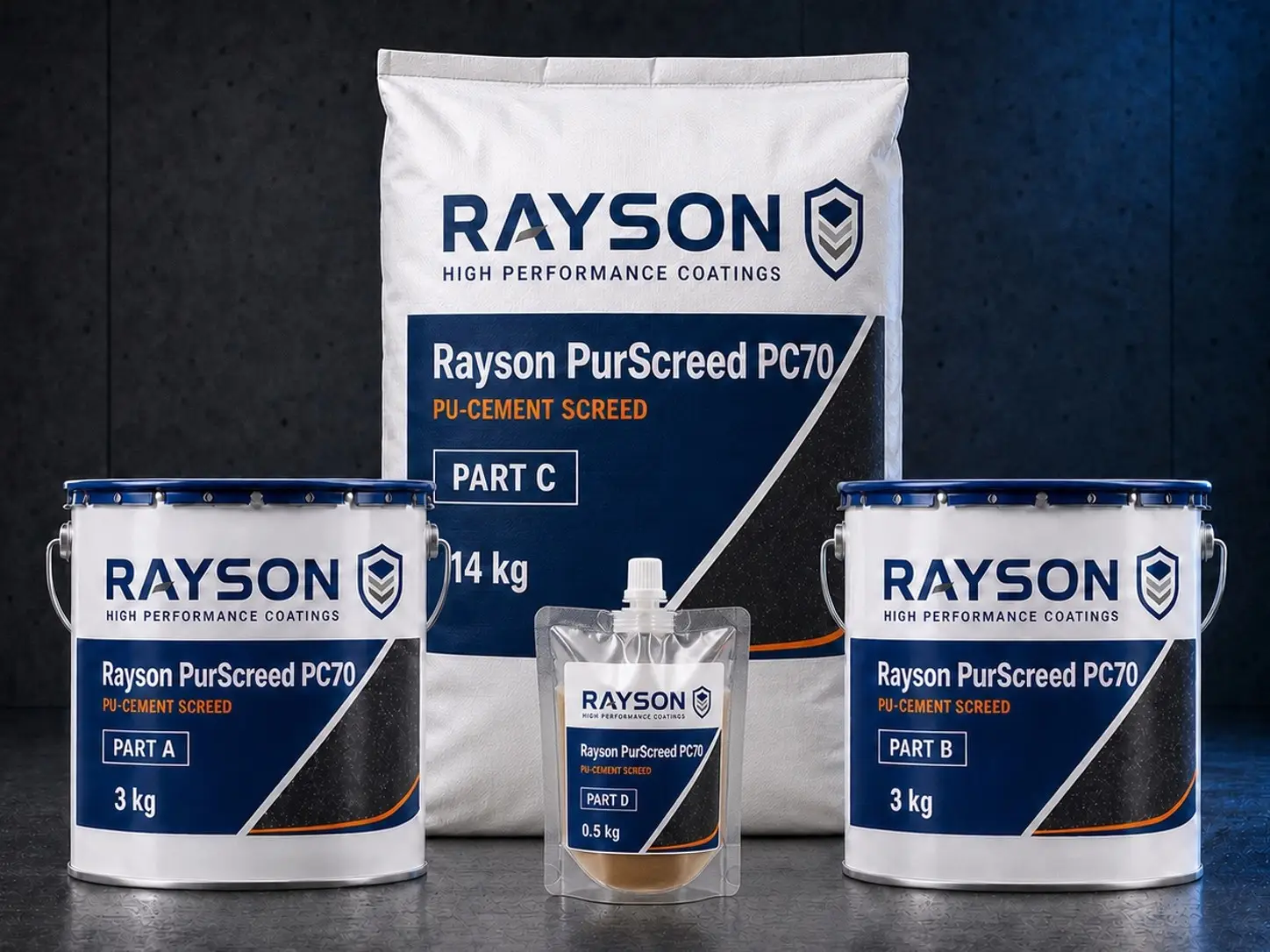
Organic acids, fats and hot process spills — the classic food, beverage and process-industry duty — are where standard resin films fatigue. This is polyurethane-cement territory: Rayson PurScreed PC70 is built for organic acids, hot oil and fat, and the thermal shock of hot washdown, applied at 1.5–3 mm by trowel.
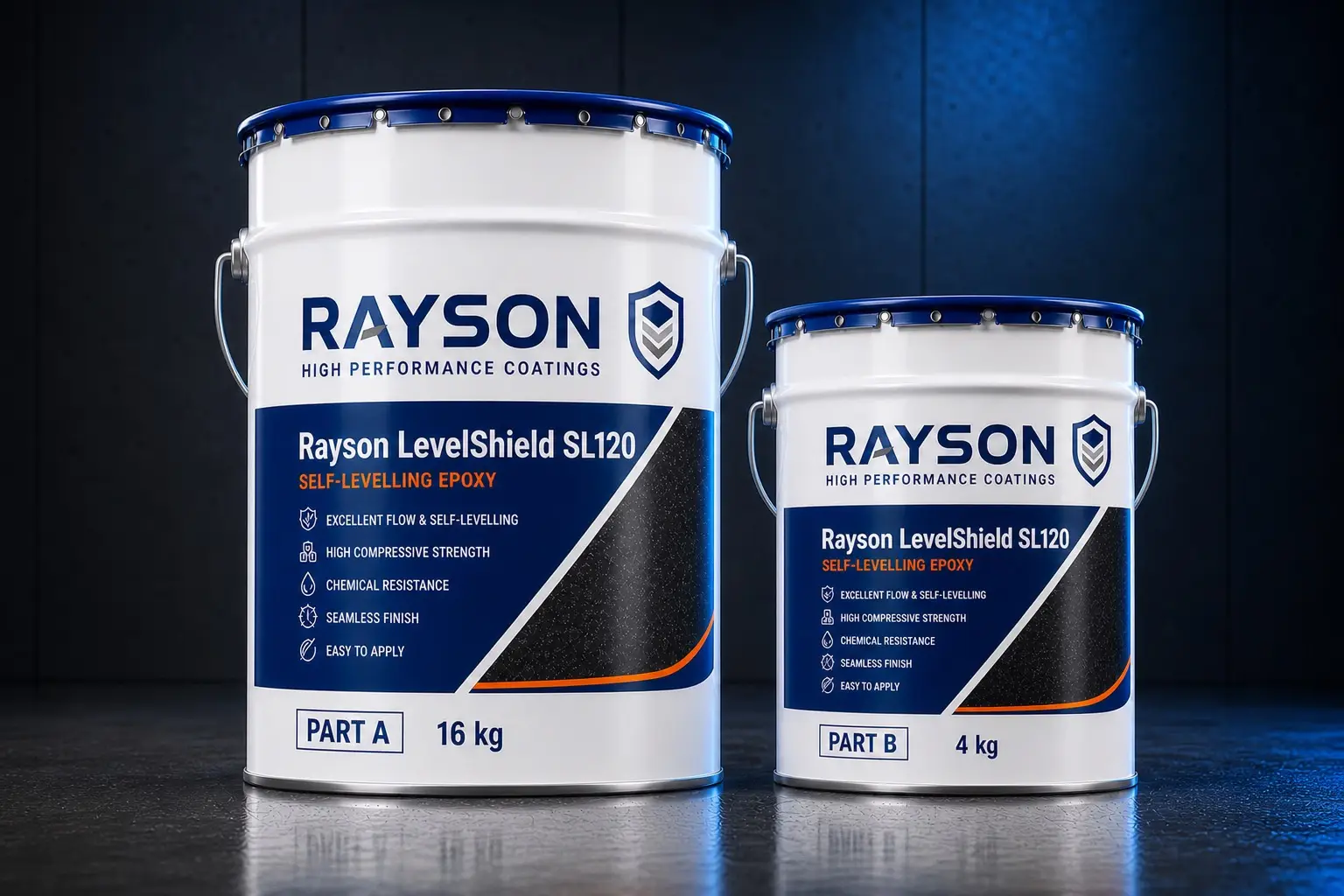
General chemical duty at ambient temperature — many aqueous chemicals, splash exposure and trafficked process floors — suits seamless epoxy systems such as Rayson LevelShield SL120, which give an impervious, cleanable surface across production areas.
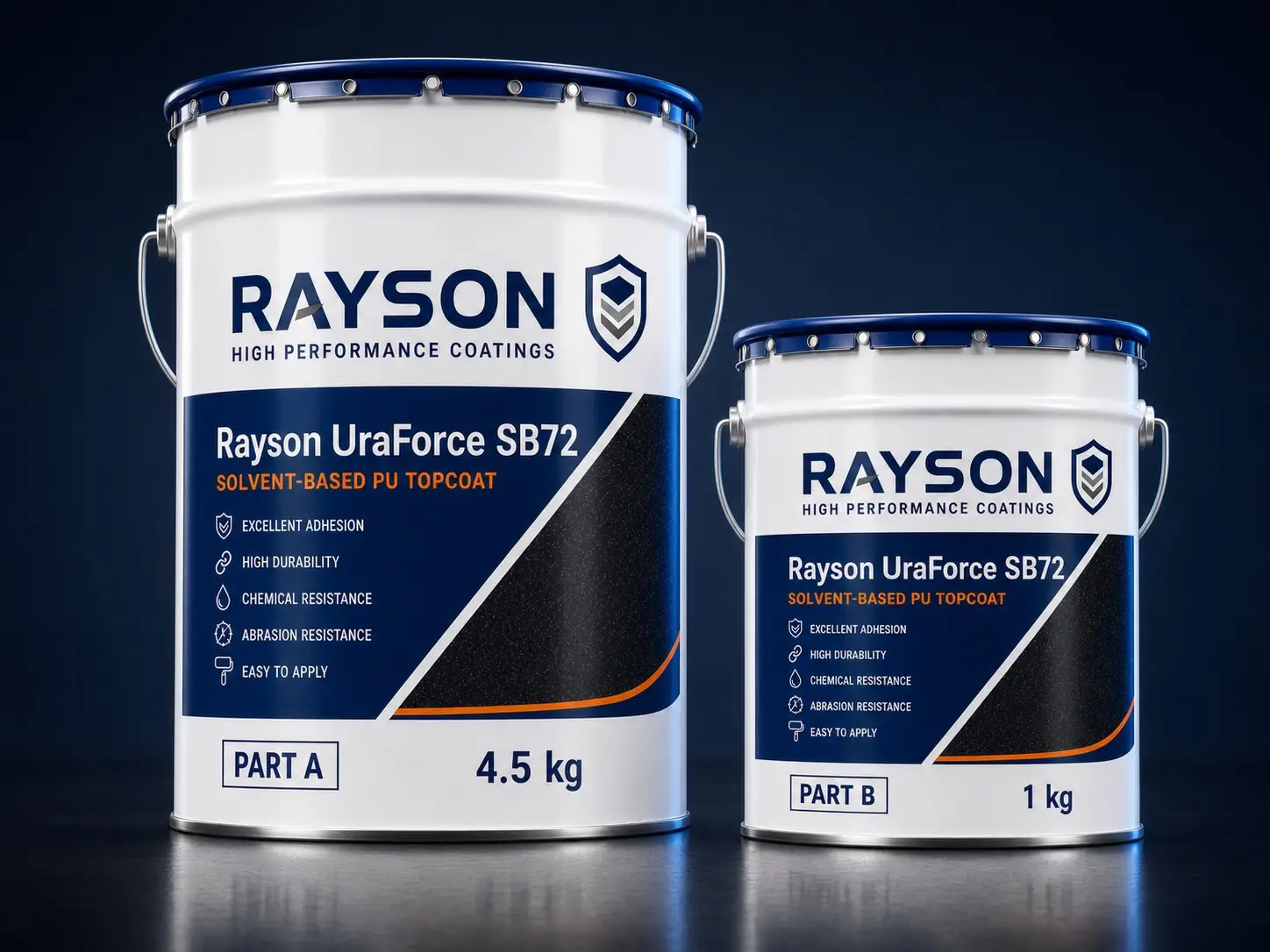
Exposed or colour-critical areas can add a polyurethane finish such as Rayson UraForce SB72, which pairs broad chemical resistance with UV stability where sunlight would chalk an epoxy.
Aggressive solvents, oxidisers and unusual chemistry are exactly the cases to verify against the manufacturer’s resistance data for the specific product — and to say so in the specification. A supplier who answers “resistant to everything” has answered nothing.
Detailing is half the resistance
Chemical failures cluster where liquid sits, not where it splashes: drain surrounds, bund floors, joints, and the ponding spot every slab has somewhere. Falls to drains, coved junctions, and properly sealed joints keep contact short — which multiplies the real-world life of whatever system is chosen. In bunded containment areas, assume prolonged contact by definition and specify accordingly.
Inspect like it matters
Chemically loaded floors earn a maintenance routine: visual checks of the known ponding points, prompt cleanup as a working practice, and early repair of any breach — because chemical attack that reaches the concrete does structural damage the flooring budget will feel. A floor chosen from a spill map, detailed for drainage and inspected honestly is a decade-scale asset; a floor chosen from an adjective is a claim waiting to be tested.