Rayson technical supervisor inspecting a seamless conductive floor in a clean production facility
ESD Flooring Singapore

ESD flooring for Singapore electronics facilities

ESD flooring protects electrostatic-sensitive electronics by giving static charge a controlled, continuous path to earth. A real ESD floor is a designed system — primer, conductive earthing layer with grounding points, then a conductive wearing coat — installed to a resistance target set by your ESD control programme and verified by measurement after cure. Rayson manufactures the StaticGuard conductive system in Singapore and supports the full sequence from target-setting to documented verification.

Conductive vs dissipative — set the target first

"Anti-static" gets used loosely. What matters is the measured resistance class your operation requires: conductive floors move charge to earth fastest and suit the most sensitive assembly work; static-dissipative floors bleed charge more slowly and suit many handling and storage areas. Your ESD coordinator or facility engineer sets the range; the floor is then engineered to hit it. Starting with a product instead of a target is how facilities end up with floors that fail audit.

The StaticGuard system build-up

LayerRoleProduct
1. Substrate preparationSound, dust-free, moisture-checked slab; repairs reinstatedMechanical prep + MortarBond EM90 where needed
2. PrimerBond and sealPrimeBond E20
3. Earthing layerConductive layer + copper grounding points, tied to building earthSystem element, coordinated with your electrical contractor
4. Conductive wearing coatSeamless self-smoothing conductive surfaceStaticGuard CX90
5. VerificationResistance-to-ground & point-to-point measured and documentedHandover record against your target range
Honesty note: we don't quote a blanket resistance number on a web page, because the right range is set by your ESD programme and verified on your installed floor — not claimed in advance. What we commit to is the engineering sequence above and measured proof at handover.

Beyond the ESD zone

Electronics facilities pair ESD areas with clean, dust-free general floors — typically LevelShield SL120 self-levelling epoxy — and demarcated logistics routes. See the electronics industry page and electronics facilities application for the full picture.

Products for ESD and electronics floors

Rayson StaticGuard CX90 — Static-control flooring
StaticGuard epoxy

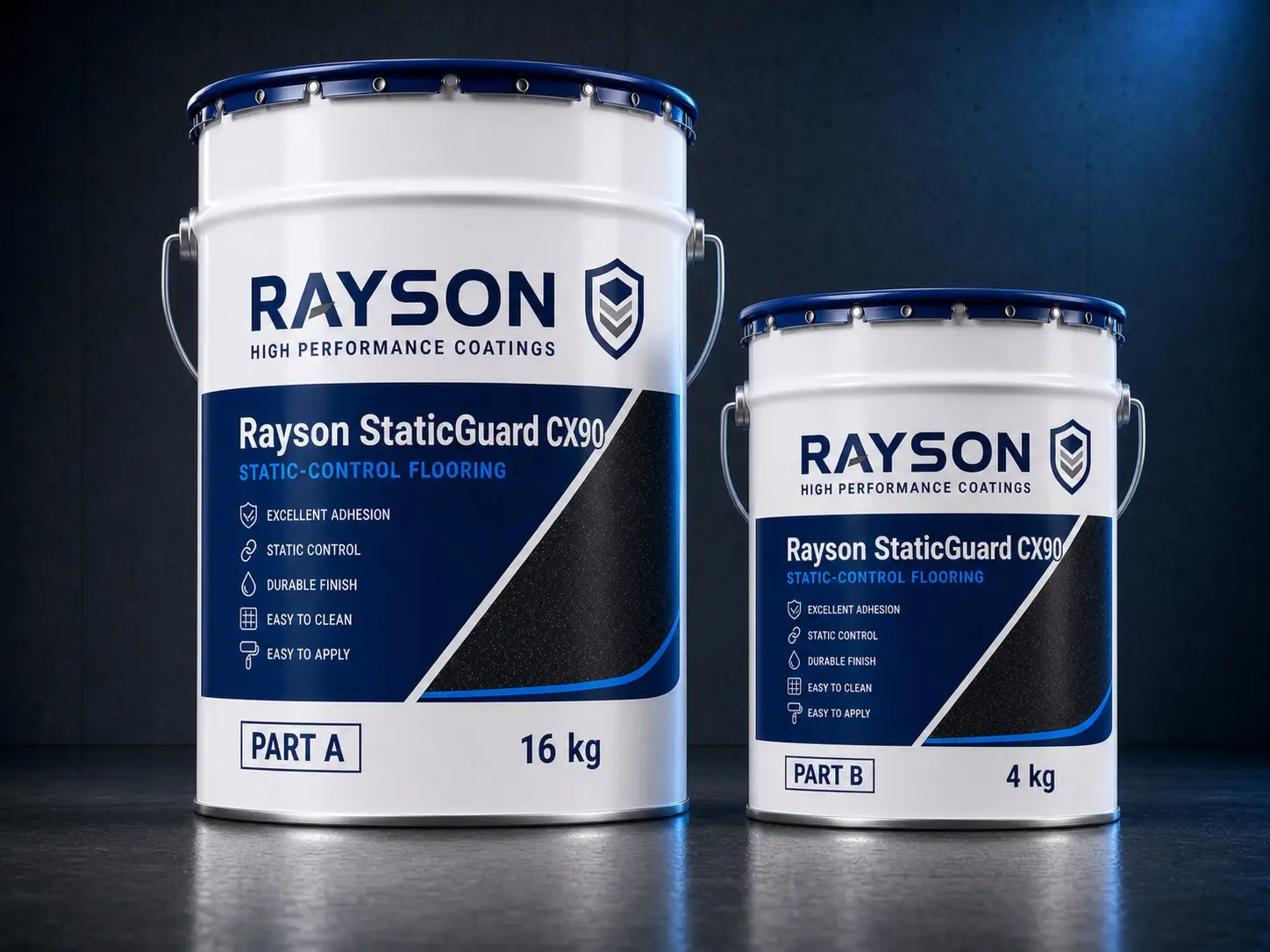
Rayson StaticGuard CX90

Rayson StaticGuard CX90 is a two-component, solvent-free conductive epoxy flooring that gives ESD-protected areas a self-smoothing, permanently conductive, chemically resistant wearing surface.

  • Surfaces: concrete, walls
  • Role: finish
View product
Rayson PrimeBond E20 — Primers & bonding coats
PrimeBond epoxy

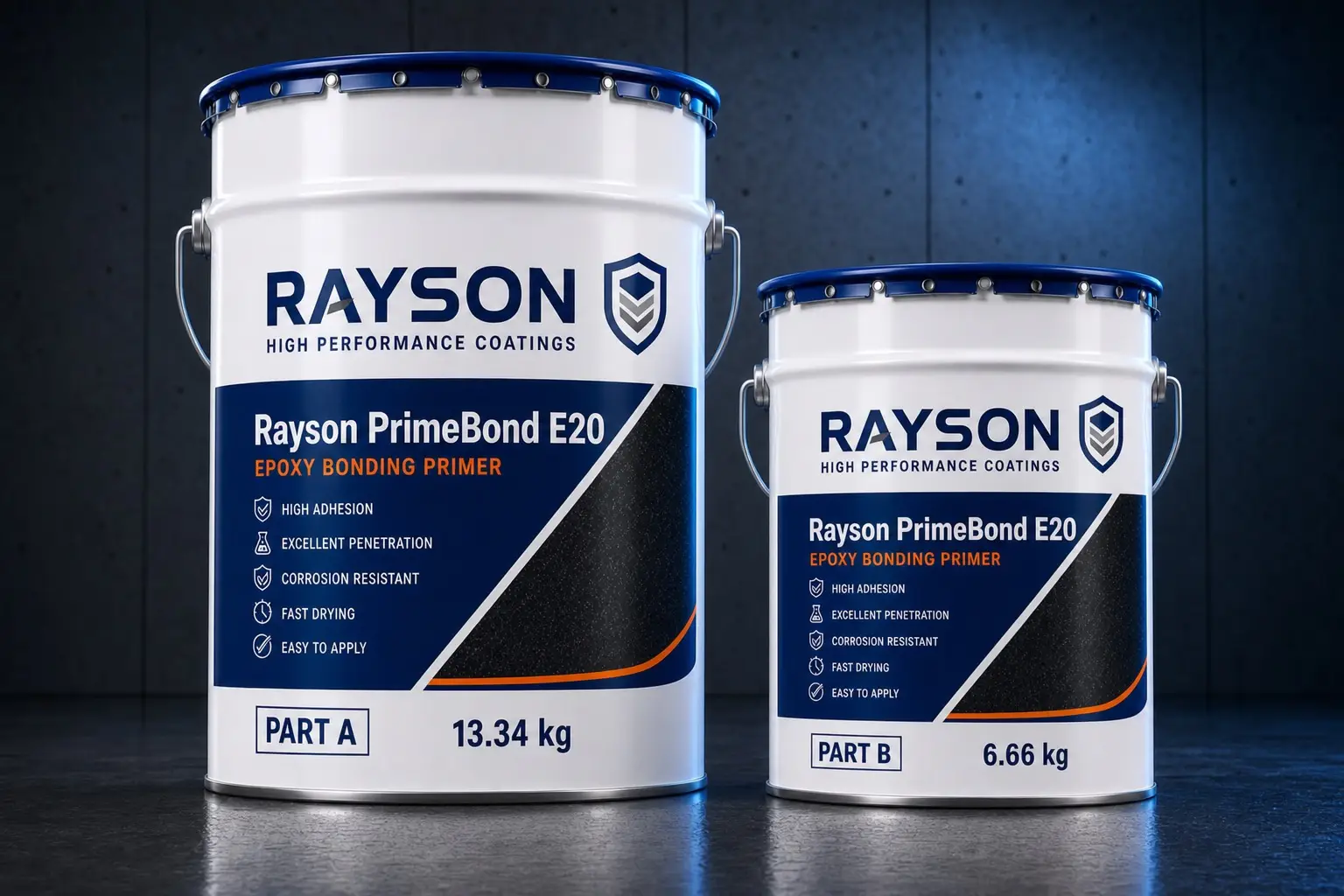
Rayson PrimeBond E20

Rayson PrimeBond E20 is a two-component, medium-viscosity, solvent-free epoxy bonding primer that anchors resin floor systems to concrete, screed, asphalt and prepared metal — on dry or damp substrates.

  • Surfaces: concrete, cement screed
  • Role: primer
View product
Rayson LevelShield SL120 — Self-levelling floor systems
LevelShield epoxy

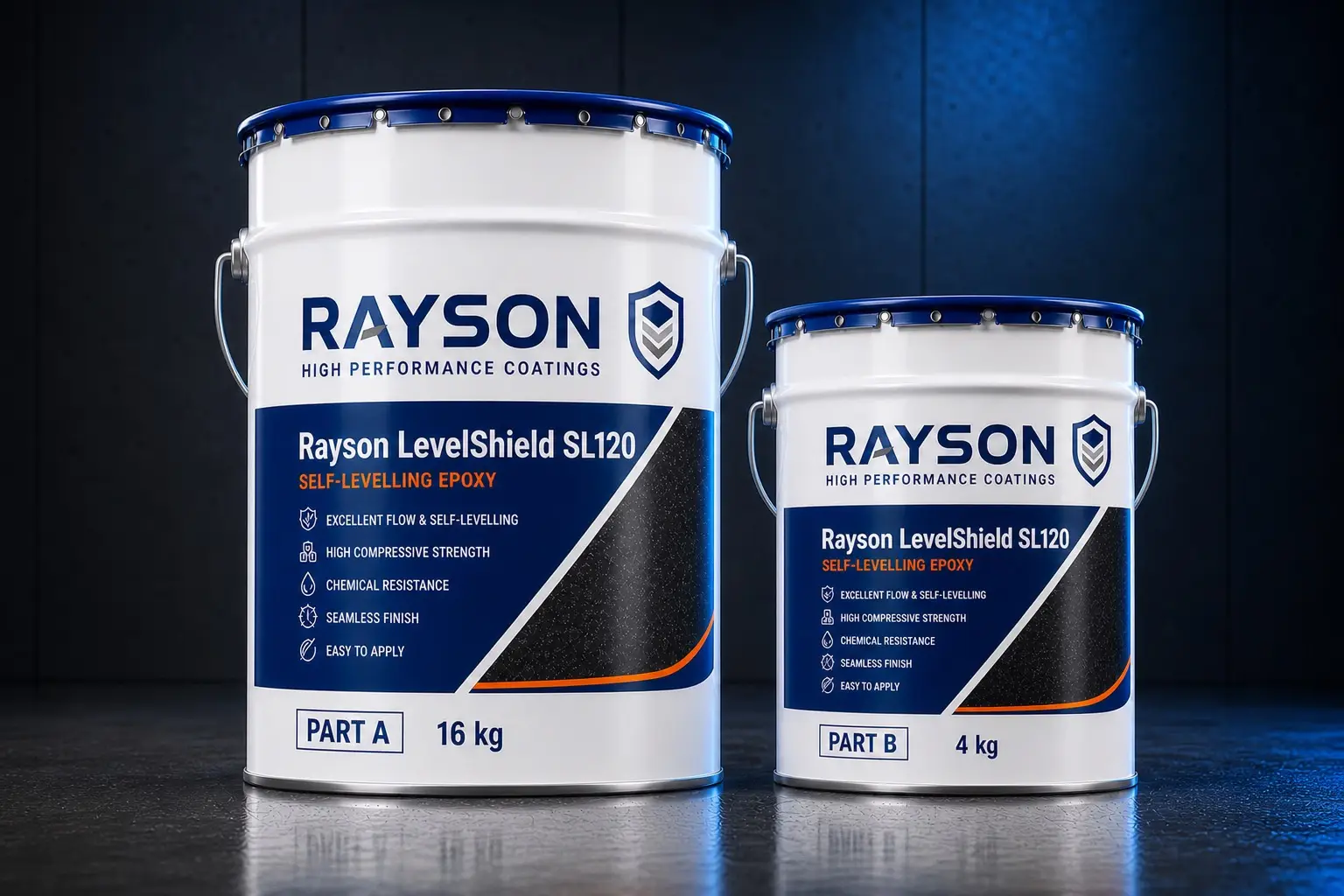
Rayson LevelShield SL120

Rayson LevelShield SL120 is a solvent-free, two-component, self-smoothing epoxy floor system that delivers a seamless wearing surface with medium to heavy chemical resistance and high mechanical strength.

  • Surfaces: concrete
  • Role: body coat
View product
Rayson MortarBond EM90 — Repair mortars & compounds
PatchBond epoxy

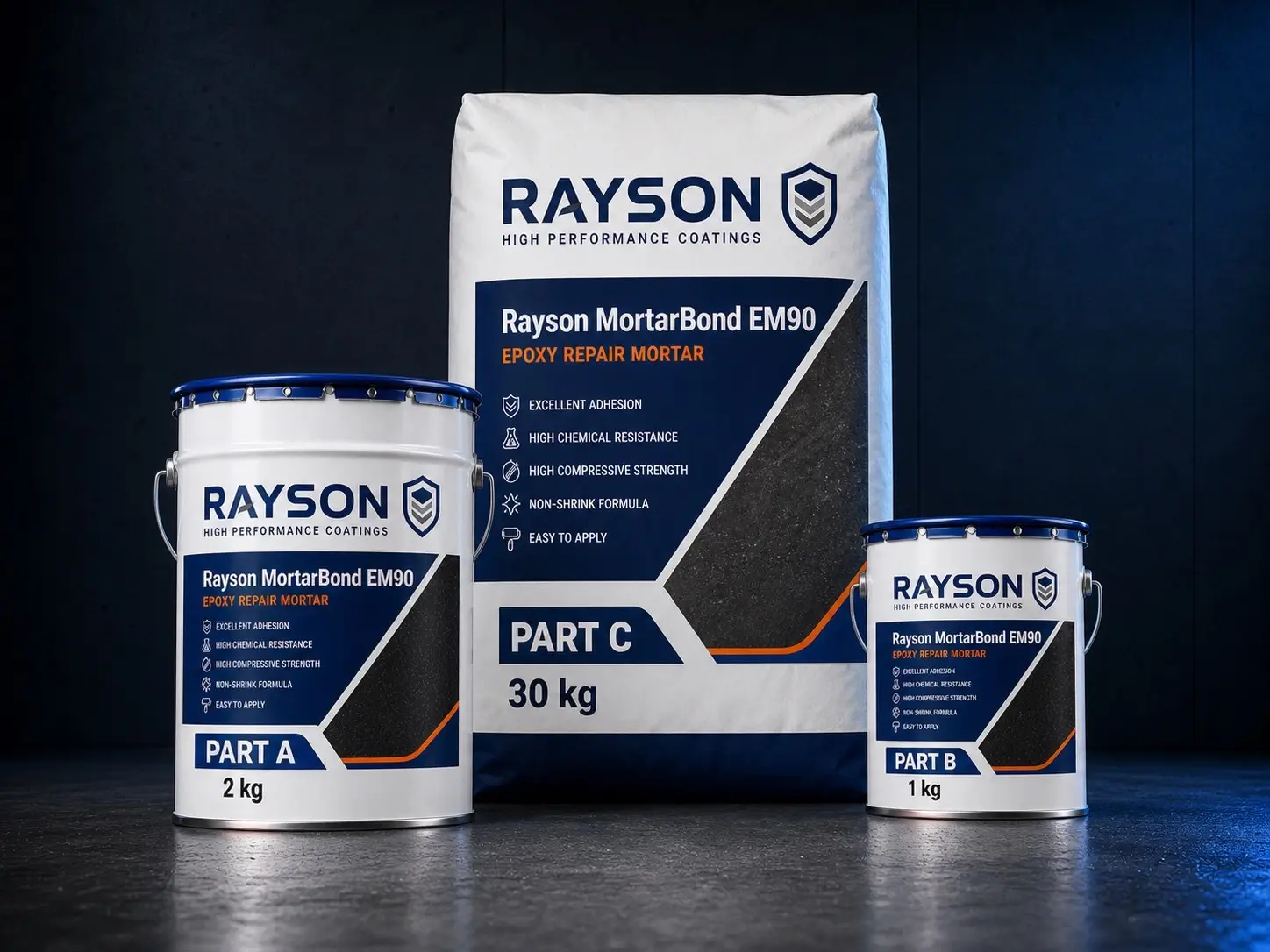
Rayson MortarBond EM90

Rayson MortarBond EM90 is a three-pack, solvent-free epoxy mortar — resin, hardener and graded aggregate — that reinstates concrete floors with a non-shrink, highly abrasion-resistant repair.

  • Surfaces: concrete
  • Role: body coat
View product

Frequently asked questions

What is ESD flooring and who needs it?

ESD (electrostatic discharge) flooring is a conductive or static-dissipative floor system that gives static charge a controlled path to earth instead of letting it discharge through sensitive components. It is standard in electronics assembly and test, semiconductor support areas, server rooms and anywhere ESD-sensitive devices are handled.

What resistance range should an ESD floor achieve?

The target range comes from your facility's ESD control programme (commonly specified with reference to standards such as IEC 61340 / ANSI S20.20), and conductive versus dissipative classes suit different operations. Define the target with your facility engineer first — then the floor system, earthing layout and footwear policy are designed to meet it.

How is a conductive floor actually built?

It is a system, not a paint: a primer, a conductive earthing layer with copper grounding points connected by the electrical contractor, then the conductive wearing coat — Rayson StaticGuard CX90 — forming the continuous path to earth. Skipping the earthing layer produces a floor that looks right and measures wrong.

How do you verify the floor works after installation?

By measuring resistance-to-ground and point-to-point at agreed grid positions after full cure, documented against the target range. We recommend written verification on handover and periodic re-testing, since contamination and wear can shift readings over time.

What maintenance does an ESD floor need?

Clean with products that leave no insulating film — ordinary polishes and some detergents defeat the conductivity. Re-test on a schedule, and repair damage promptly so the conductive path stays continuous.

Can an existing epoxy floor be upgraded to ESD?

Usually the existing coating must be assessed and often removed, because the conductive system needs its own earthing layer and a controlled build-up. A site assessment answers this quickly — contact our technical team with your slab details and ESD target.

Not sure which system fits your project?

Tell us your surface, area and timeline — our Singapore technical team will recommend a practical system and price it fast.