Coating System Selection Guide
Selecting a coating system means matching four things: the surface, the exposures it faces (traffic, chemicals, moisture, UV), the setting (interior or exterior), and the way it will be cleaned and used. From there, the chemistry follows — and most floors are a system of primer, body coat and finish rather than a single product.
Start from the surface and its exposures
Selection is a process of matching, not picking a favourite product. Work through:
- Surface — concrete, screed, wall, roof or wet area, and its condition.
- Traffic — foot traffic, pallet trucks, forklifts, point loads from racking.
- Chemical exposure — what is spilled or cleaned with, at what concentration and temperature.
- Moisture — is the slab dry, damp, or subject to ingress?
- Temperature — thermal shock from hot wash-down or process heat.
- UV / setting — interior, or exposed to sunlight?
Coating chemistries in plain language
Epoxy
Hard, strong, chemically resistant and economical — the default for most interior industrial floors. Standard epoxies yellow and chalk under UV, so they are usually used as primers and body coats rather than exterior finishes. See Rayson FloorGuard and LevelShield.
Polyurethane (PU)
Tougher against abrasion and more flexible than epoxy. Aliphatic polyurethanes are UV-stable, making them the usual choice for finishes and exterior exposure. See Rayson UraForce.
Polyurethane-cement (PU-cement)
Heavy-duty systems built for thermal shock, aggressive chemicals and impact — the go-to for food and beverage and chemical-processing floors. See Rayson PurScreed PC70.
Water-based systems
Lower odour and easier to work with in occupied buildings, at the cost of some chemical and mechanical performance versus solvent-free equivalents. Ideal for offices, retail and schools. See Rayson HydroShield.
Acrylic
Used for sports and court surfaces where colour stability, consistent texture and outdoor durability matter more than heavy chemical resistance. See Rayson CourtFlex AC25.
Interior versus exterior: the UV point
This one decision rules out whole categories. Aromatic resins — most standard epoxies — degrade under UV, yellowing and chalking. For anything exposed to sunlight, specify an aliphatic polyurethane finish. Getting this wrong is a common and avoidable cause of disappointing exterior floors.
Think in systems, not single products
A durable floor is almost always a system: a primer to bond and seal, a body coat to build performance, and a finish to handle appearance and resistance. Choosing one product in isolation — a finish with no compatible primer, say — is a frequent mistake. Rayson products are designed to work together in documented systems, shown on each product page.
Before you ask for a specification
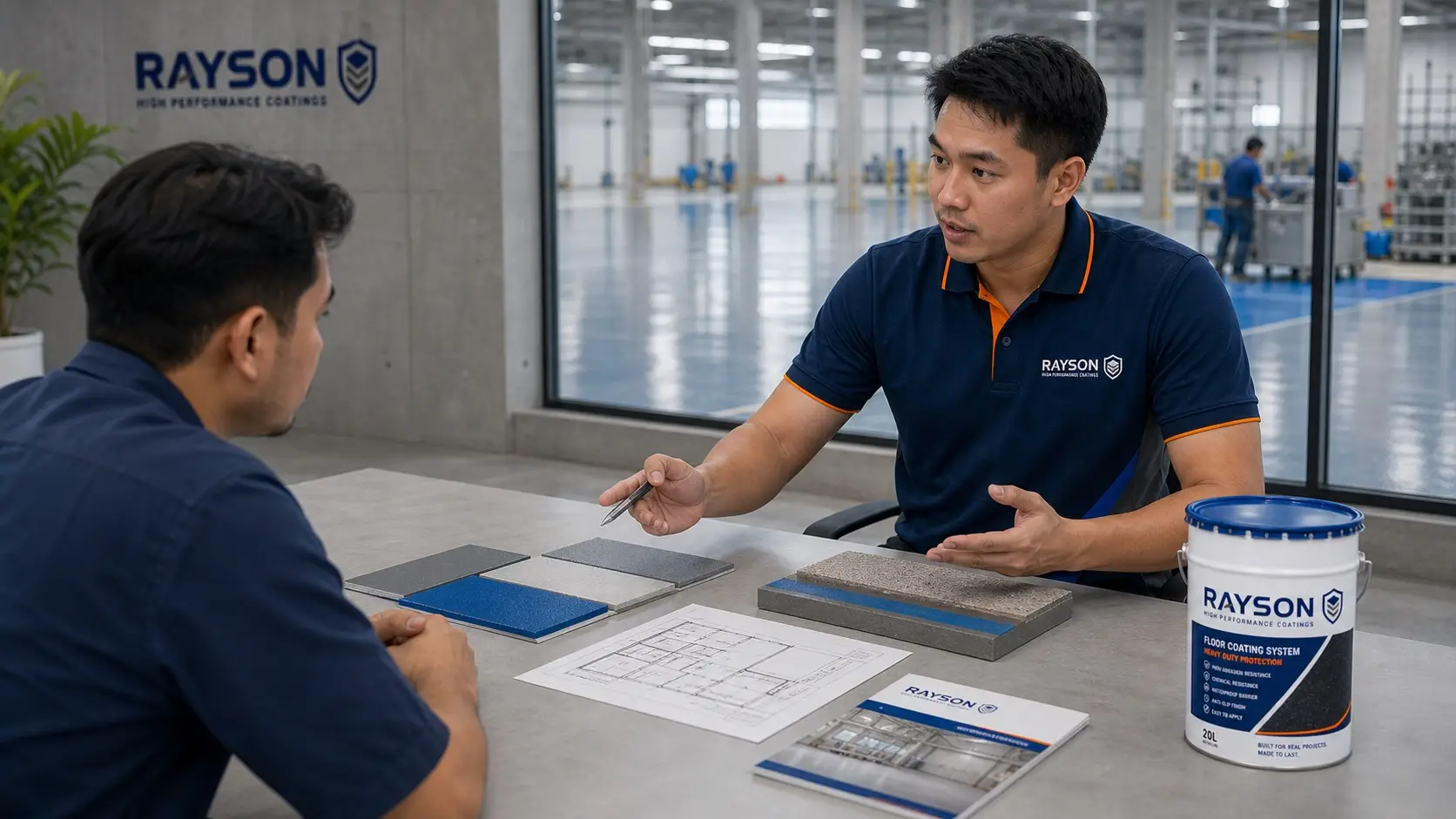
Gather the surface type and condition, the area, the exposures above, your cleaning regime, and your downtime and completion constraints. Bring that to our team and we can specify a suitable system quickly and accurately. When conditions are mixed or unusual, that consultation is worth far more than guessing from a product page — get in touch.
Frequently asked questions
What is the difference between epoxy and polyurethane?
Broadly: epoxies are hard, chemically resistant and cost-effective but can yellow and chalk under UV. Polyurethanes are tougher against abrasion, more flexible and — in their aliphatic form — UV-stable, making them the usual choice for finishes and exterior exposure. Many floors use both: an epoxy body coat sealed with a PU finish.
When do I need a polyurethane-cement screed?
When the floor faces thermal shock (hot wash-down, steam), aggressive organic acids or heavy impact — typically food and beverage and chemical-processing areas. PU-cement systems handle these conditions far better than standard epoxy floors.
Why does interior versus exterior matter so much?
UV light. Aromatic resins (most standard epoxies and some polyurethanes) yellow and chalk in sunlight. For exterior or sun-exposed areas you want an aliphatic polyurethane finish, which holds colour and gloss.
What information should I gather before asking for a specification?
Surface type and condition, area, the exposures it faces (traffic, chemicals, temperature, moisture, UV), your cleaning regime, downtime windows and required completion date. The more of this you can share, the faster and more accurately we can specify a system.