“Anti-slip” is a claim; a slip-resistance rating is a measurement. When a specification, an insurer or a safety officer asks whether a floor is safe enough, the conversation runs on two recognised test families — and knowing what each does (and does not) tell you is the difference between specifying safety and specifying a word.
The ramp test and R-ratings
The R-rating system comes from a laboratory ramp test. A test surface is mounted on an adjustable ramp, coated with a standard contaminant, and an operator in standard footwear walks it as the angle increases. The angle at which slipping begins assigns the class — from R9 (the lowest class in the system) to R13 (the highest). Two things follow from how the test works:
- It is comparative, not absolute. R11 means “more slip resistance than R10 under the test conditions”, not “safe in your kitchen”.
- R9 is not ‘non-slip’. It is the entry class of the scale — a common misunderstanding in specifications.
R-ratings are useful shorthand for comparing systems and matching a texture grade to a duty, and they are how textured systems such as Rayson GripSafe AP12 profiles are typically discussed at specification stage.
The pendulum test — measurement on the real floor
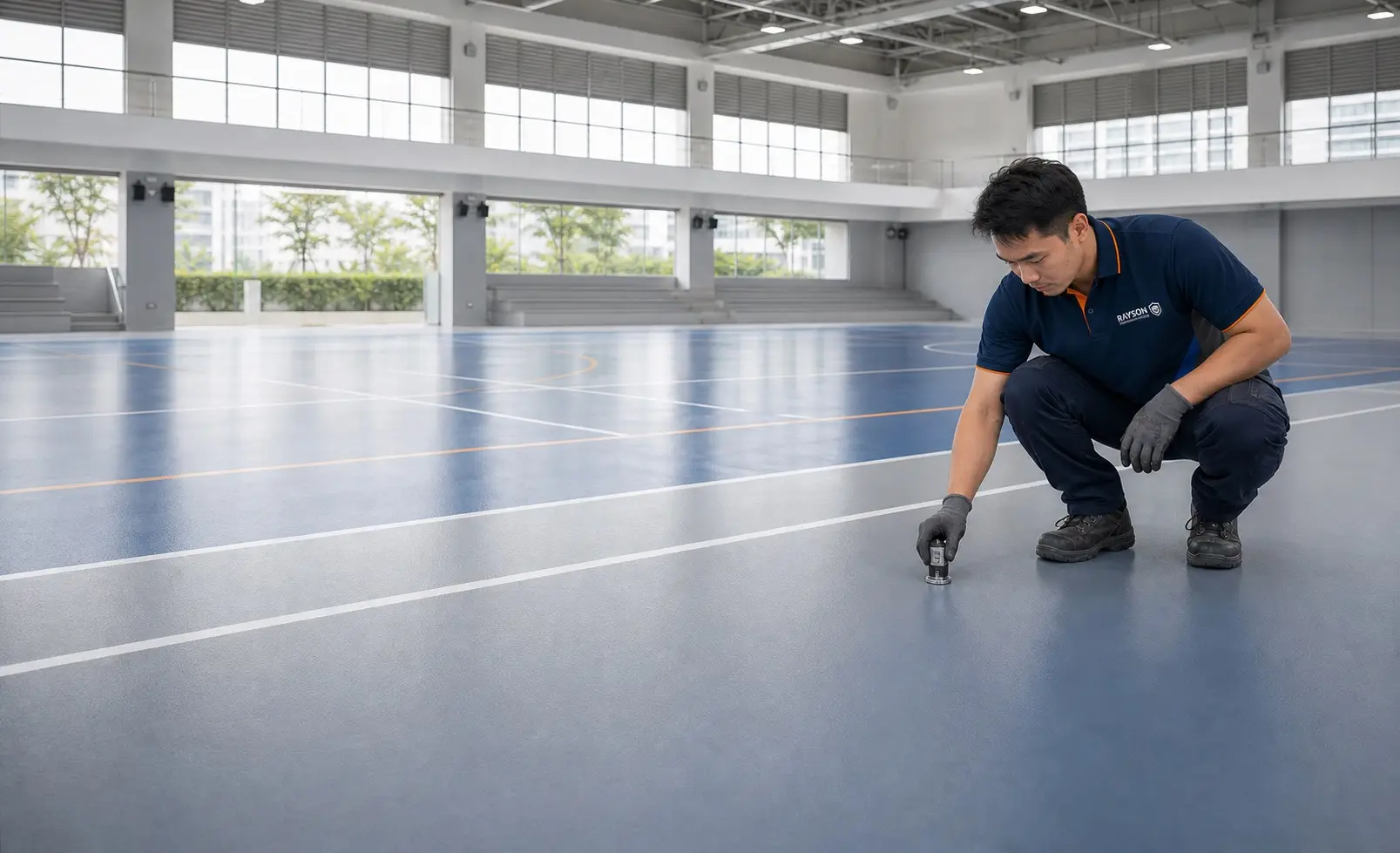
The pendulum test swings a standardised rubber slider across the installed surface and reads a slip-resistance value from how much the surface slows it. Because it can be carried out on the actual floor — new or old, wet or dry — it is the tool used for site verification, periodic checks and disputes, and it is the method Singapore’s wet-floor slip-resistance standard is built around. Where a ramp rating describes a product, a pendulum reading describes your floor, today.
The two caveats that keep specifications honest
A rating describes the surface as tested. Real floors carry real contaminants — cooking oils, soap films, process dust — that can defeat a texture which performs well clean. Specify against the zone’s realistic worst condition, not the showroom condition.
Slip resistance is perishable. Traffic polishes texture; cleaning regimes that are too gentle leave films, and regimes that are too aggressive erode profile. A floor that tested well at handover can drift out of its intended performance in service — which is why wet, heavy-traffic areas deserve periodic re-testing, and why texture choice must be paired with a cleaning method the operator will actually sustain.
Specifying by zone
The practical method mirrors good flooring practice everywhere: map the zones by their wet and contamination reality, assign heavier texture only where conditions demand it, and keep smoother, easily cleaned finishes where floors run dry. For how texture interacts with washdown hygiene in food facilities, see food factory flooring in Singapore; for the systems themselves, start at anti-slip flooring Singapore.