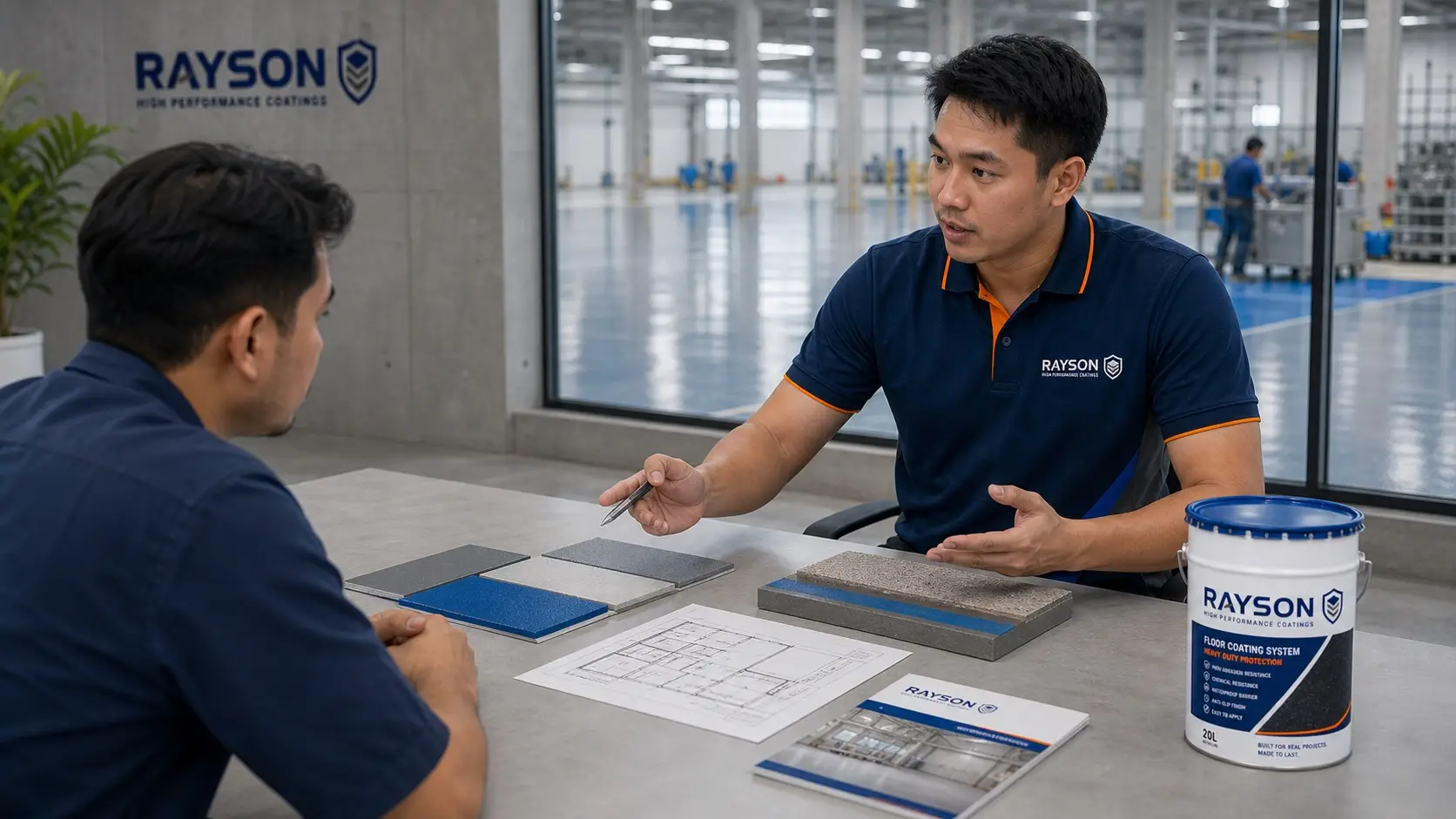
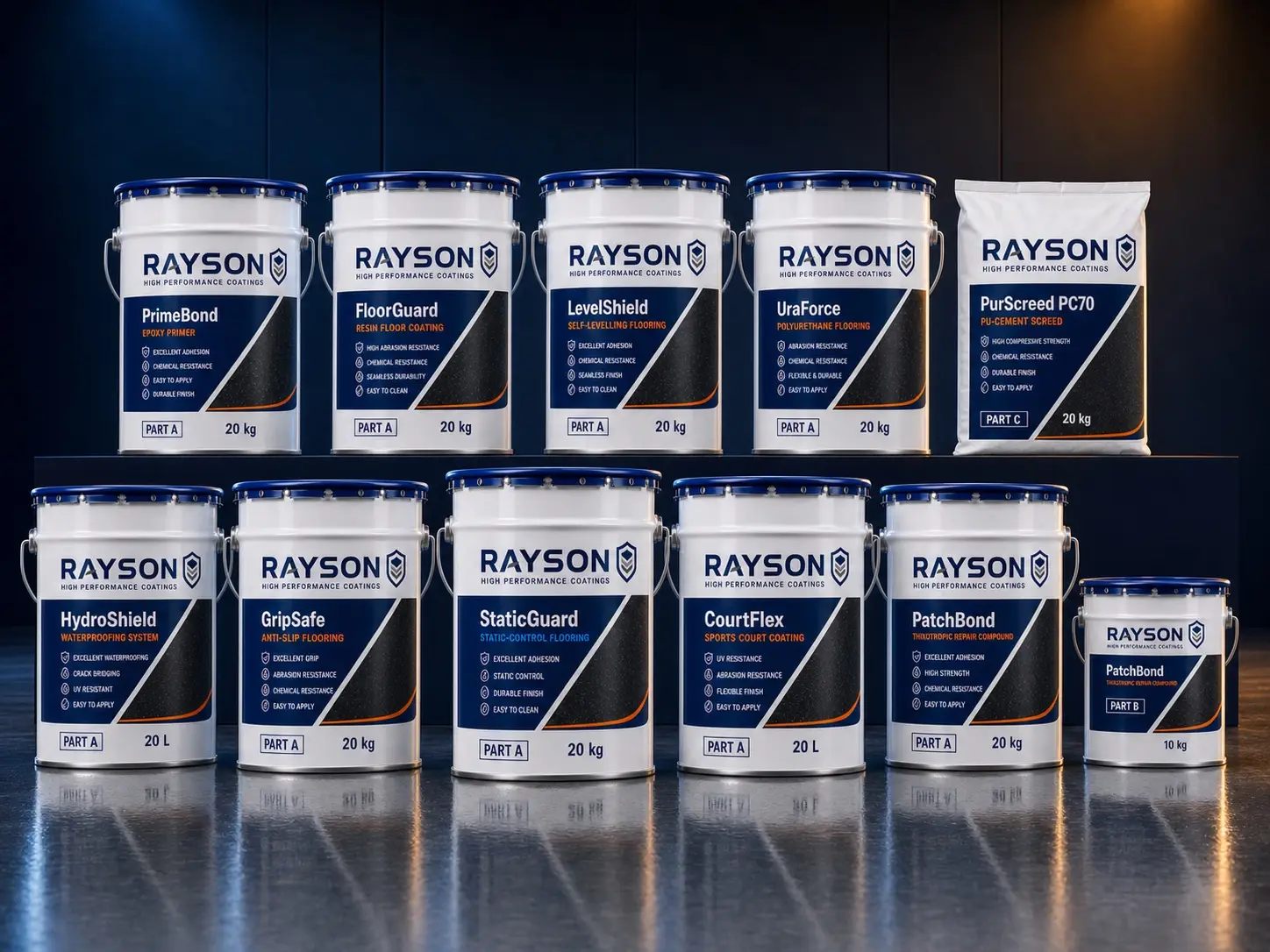
Behind many coating brands on the Singapore market is a manufacturer you have never heard of. Private-label (sometimes called OEM or ODM) manufacturing is a normal, established part of the coatings industry: a factory produces the product, and it is sold under the customer’s brand. Done well, it lets a flooring contractor, distributor or regional brand offer its own product line without building a plant. Done casually, it produces mystery pails with nobody clearly accountable. The difference is process.
The two levels: label and formulation
Private-label in its simplest form puts your brand on an existing, proven formulation — the fastest and lowest-risk route, because the product already has production history and performance data behind it.
Custom manufacturing develops or adapts a formulation to your requirements: a performance target, a substrate, a market. This is laboratory and pilot work, with sampling and testing rounds — slower and more involved by nature, because you are engineering a product, not printing a label.
Most programmes are honestly somewhere between the two: an existing base, adjusted — colour, texture, packaging, performance tweaks — for the customer’s market.
How the process actually runs
- The brief. Everything starts here — see below for what it contains.
- Base selection or formulation. The manufacturer proposes an existing base or scopes development work against the target numbers.
- Sampling. Laboratory samples and drawdown panels, tested and iterated until the target performance is met on paper and panel.
- Pilot batch. A production-scale trial that proves the formulation behaves at volume — the step that separates manufacturers from mixers.
- Labelling and documentation. Your branding, plus the regulatory layer: technical data sheets and safety data sheets for the product as sold.
- Production and repeat batches. With batch records and traceability, so pail one thousand behaves like pail one.
Why nobody honest quotes a universal MOQ
Minimum order quantities and lead times are the first questions every private-label enquiry asks, and the only honest answer is per project. A production batch has a physical size; raw materials have their own minimums and lead times; packaging — especially custom-branded pails — has its own economics. An established base in standard packaging might be viable at modest volumes; a bespoke formulation in custom packaging is a different commitment entirely. Any fixed number published without seeing your brief is marketing, not manufacturing.
What a good brief contains
The quality of the first conversation is set by the brief you bring:
- Application and substrate — what the coating is for, applied to what, in what conditions;
- Performance targets — the properties that matter and the numbers to meet, or the reference product to match;
- Volumes — realistic launch and annual quantities, so MOQ and batch economics can be answered specifically;
- Packaging — sizes, branding, labelling language and market;
- Regulatory context — where it will be sold and any compliance requirements the documentation must meet.
Talking to Rayson about manufacturing
Rayson is a Singapore-based coatings manufacturer, and manufacturing enquiries are welcome — brought as a brief, answered specifically, with the same open-documentation approach we take to our own product range: every product we sell carries a published technical data sheet, and anything we produced for you would be held to the same standard. Start the conversation through how Rayson manufactures and supplies.