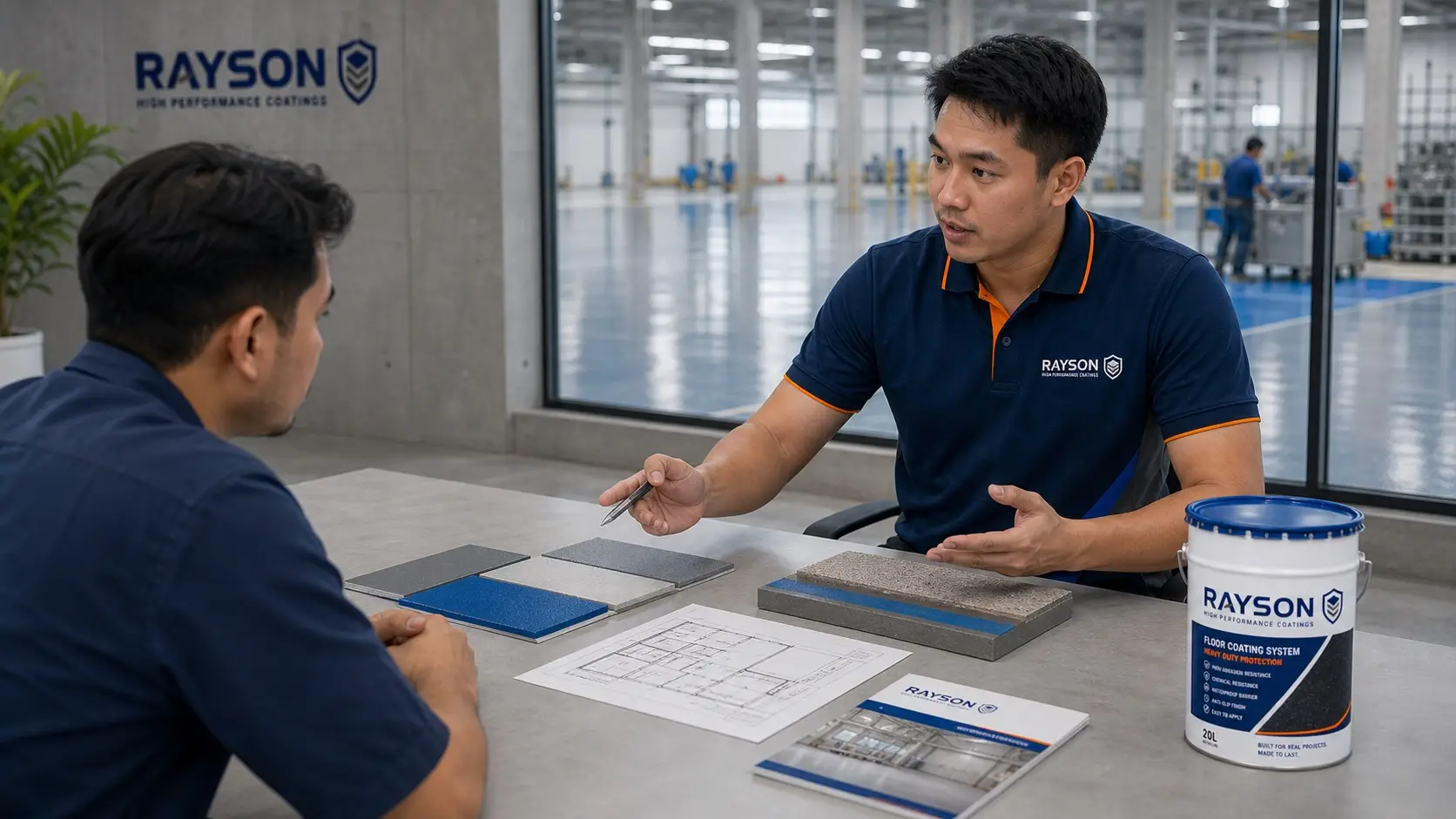
Ask three companies to quote the same floor in Singapore and you may be talking to three completely different businesses: one that manufactures the coating, one that resells a coating made by someone else, and one that installs coatings it neither makes nor stocks. All three are legitimate. Problems start when a buyer does not know which one they are dealing with — because each is accountable for a different part of the finished floor.
What each party actually does
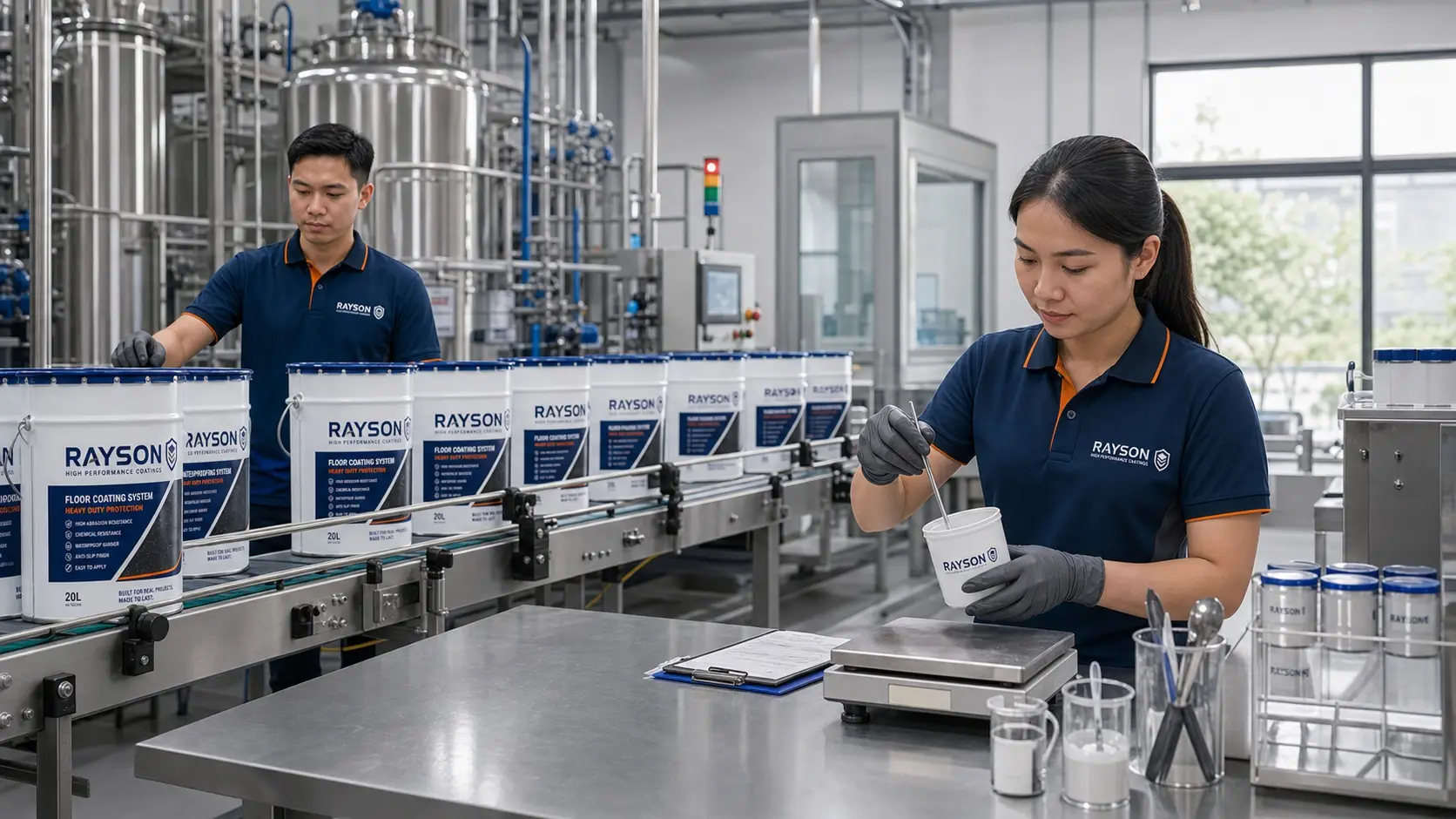
The manufacturer formulates and produces the coating, writes the technical data sheet, controls batch quality, and employs the people who can answer the hard technical questions — substrate moisture limits, recoat windows, chemical resistance, failure diagnosis. When something goes wrong with the material, this is the only party who can truly investigate it.
The distributor buys from manufacturers and resells, earning its margin on stock, logistics and reach. A good distributor is genuinely useful — local availability, small quantities, consolidated purchasing — but it did not formulate the product, and its technical depth is second-hand by definition.
The applicator installs. Workmanship — preparation, mixing, timing, film build, detailing — decides as many floor outcomes as material does, so a skilled applicator is not optional. But an applicator quoting “flooring” is quoting labour plus somebody’s material, and the material accountability still traces back to whoever made it.
The questions that reveal who you’re talking to
- “Who wrote this TDS?” A manufacturer hands you its own document. A distributor hands you someone else’s. An applicator may struggle to hand you one at all — which tells you what you need to know.
- “If the floor fails, who investigates the material?” The honest answer always ends at a manufacturer. If the chain from your floor to that manufacturer is long, foreign, or vague, your recourse is too.
- “Who controls the batch?” Consistency between the sample you approved and the pails on site is a manufacturing question. Ask how the product is traced from production to your project.
- “Where does the system come from?” A floor is a system — primer, body, finish — and compatibility between layers is engineered, not assumed. One manufacturer behind the whole build-up means one party owns that compatibility.
Where Rayson stands in this
Rayson is a manufacturer — we make the coating systems, publish a technical data sheet for every product openly, and give direct technical support from the people responsible for the products. We are a new company and say so plainly; what we offer is not decades of history but first-party accountability: the party that answers your specification question is the party that made the material.
Whoever you buy from, keep the applicator excellent and the material accountability short. The floors that age well almost always have both — and the disputes that age badly almost always started with nobody being sure who was responsible for what.
For how we work as a manufacturer, see coating manufacturer Singapore.