Of all the reasons coatings fail in Singapore, moisture is the one that catches the most projects out — because a slab can look bone dry, be a month old, and still hold enough moisture to blister a coating. Understanding slab moisture, measuring it, and choosing a system that suits the reading is the difference between a floor that lasts and one that bubbles within months.
Why Singapore slabs stay damp
Concrete on the ground sits on damp soil in a humid, high-rainfall climate. Without an effective damp-proof membrane beneath it, water vapour moves continuously up through the slab — there is a near-endless supply below and humid air above. Even suspended slabs hold construction and ambient moisture longer here than in drier markets.
The practical consequence: slabs in Singapore frequently never dry to the level a standard, fully impermeable coating wants. Waiting is not always an option — the moisture keeps coming — so the specification has to account for it rather than assume a dry substrate.
What moisture does to a coating
Put an impermeable coating over a slab that is still giving off vapour, and the vapour has nowhere to go. Pressure builds under the film until it domes into blisters, then lifts and peels. This shows up as the large, sometimes reappearing blisters described in epoxy floor peeling and delamination. It is a substrate condition, not a product defect — which is why recoating with the same system, without addressing the moisture, simply reproduces the failure.
Measure before you coat
Calendar age is not proof of dryness. New concrete is commonly left a minimum of around 28 days before coating as a starting point, but a humid 28-day-old slab can still be too wet. The reading decides, not the date.
Principles that matter more than the specific instrument:
- Assess relative humidity within the slab, not just the surface — in-situ RH probes reflect what will actually drive vapour once the surface is sealed.
- Take representative readings, plural, across the floor. Moisture is rarely uniform; a dry entrance and a wet centre is common.
- Compare to the system’s tolerance. Every coating system has a moisture limit; the reading is only meaningful against that number.
- Watch the dew point during application — a slab colder than the surrounding air can condense moisture on the surface even when the slab itself is acceptable.
If readings are borderline or you have no damp-proof membrane, that is the moment to talk to a technical team before specifying — not after the floor blisters.
Damp-tolerant priming
The useful news is that not every coating demands a bone-dry slab. Damp-tolerant primers bond to damp — though not wet — concrete, which resolves the common Singapore situation of a sound slab that simply will not dry out.
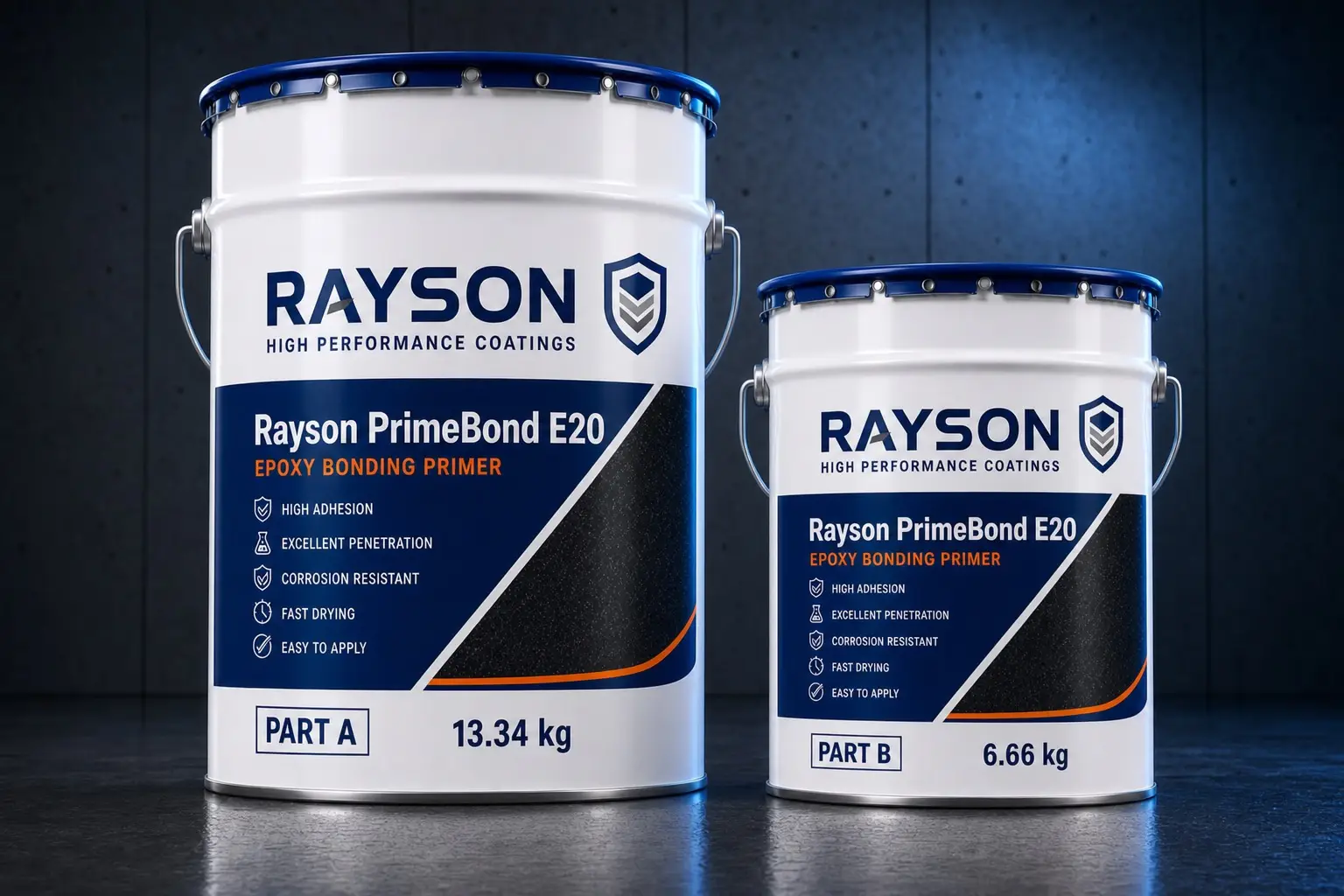
- PrimeBond E20 is a solvent-free epoxy primer formulated for dry or damp substrates, and is the workhorse first coat where slabs cannot be fully dried.
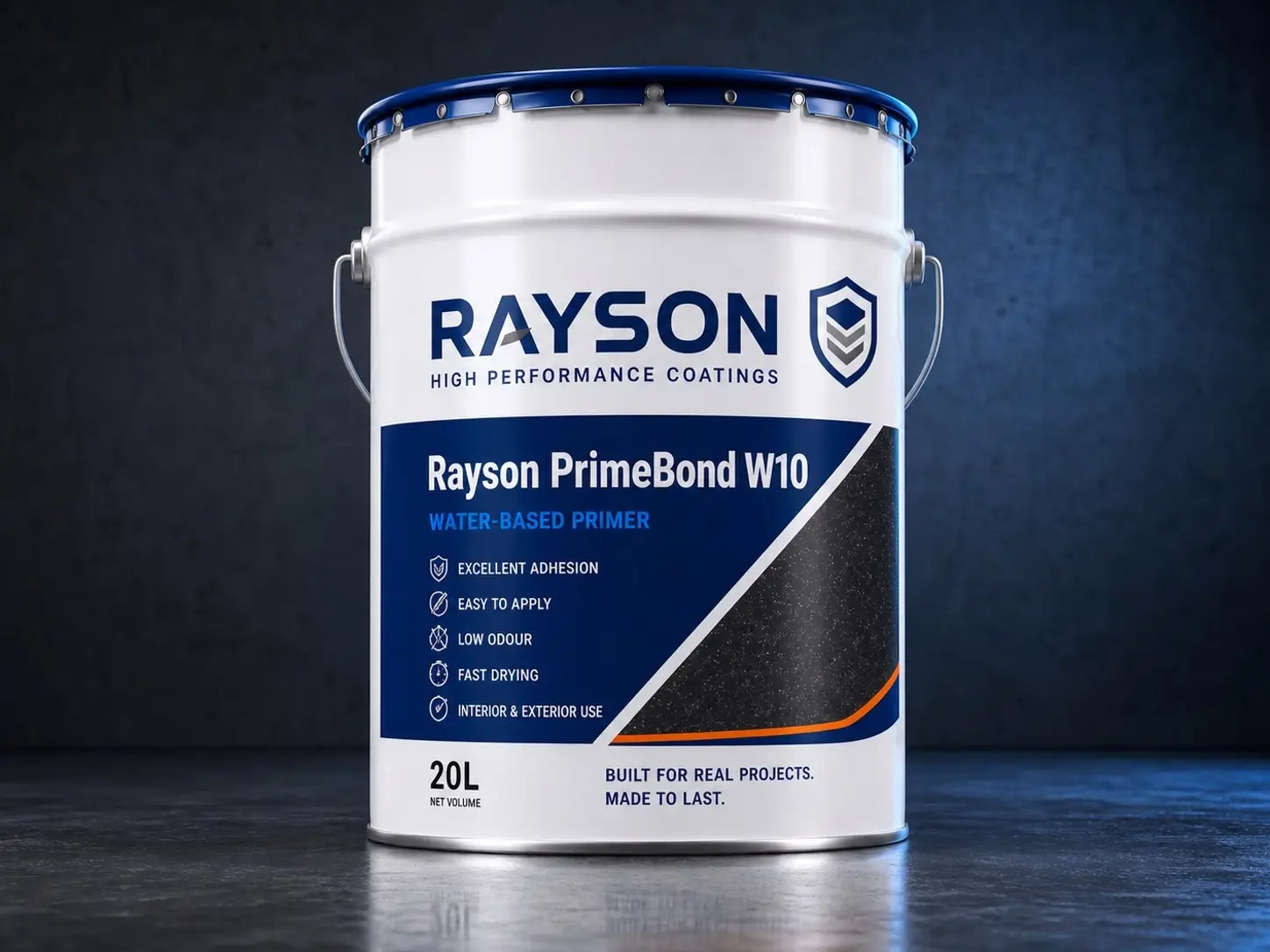
- PrimeBond W10 is a low-odour water-based primer for occupied buildings, used where the substrate is sufficiently dry by the surface-RH criterion.
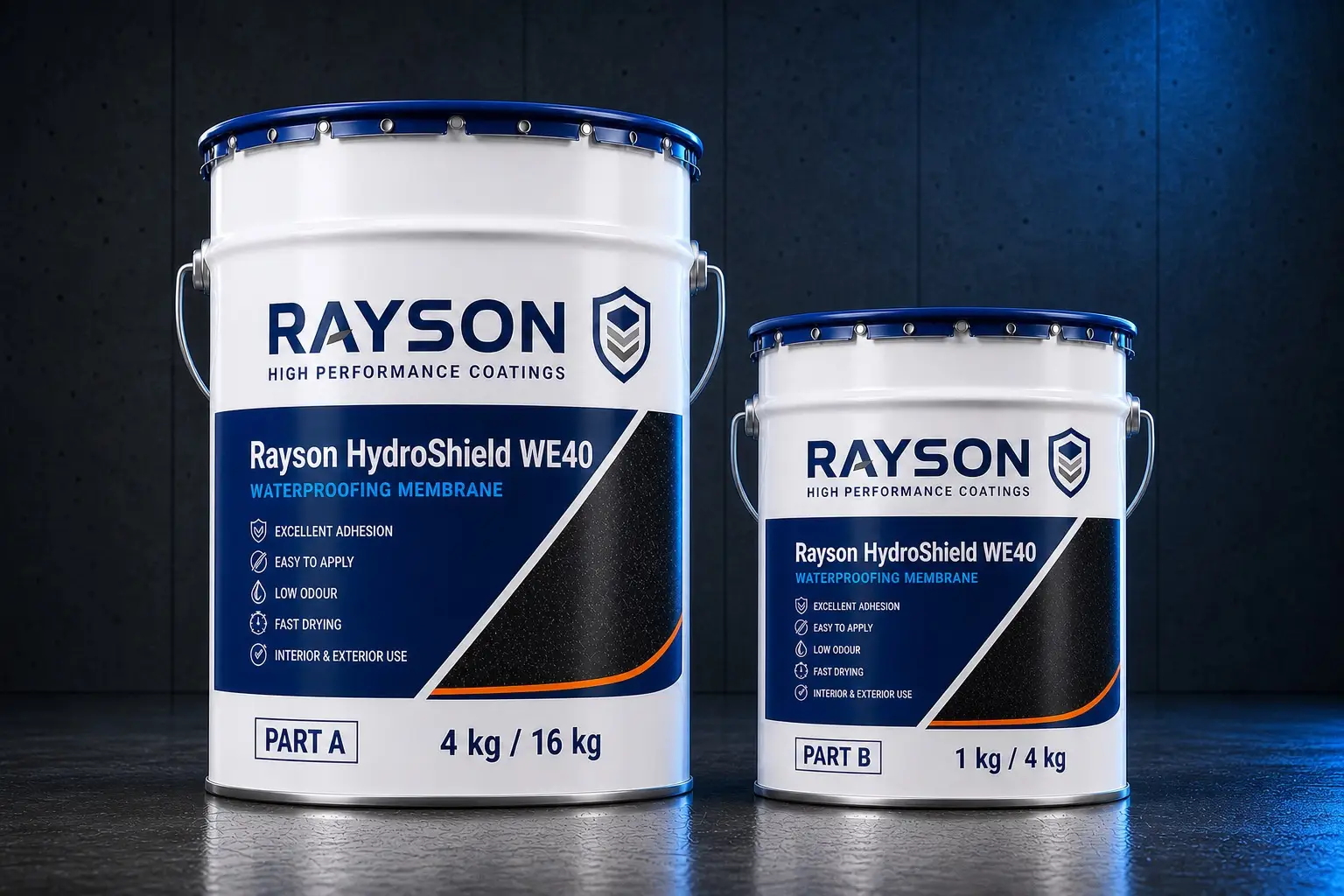
- Water-based systems such as HydroShield WE40 are more tolerant of some moisture than fully impermeable solvent-free build-ups.
The line that matters: damp is workable with the right primer; wet is not. Standing water, ponding or active ingress mean liquid water, and no primer bonds through that. Those are structural or drainage problems — a failed membrane, a leak, negative-side pressure — and they have to be fixed before any coating goes down.
The honest decision tree
- Read the slab. Representative RH readings, referenced to the system’s tolerance.
- Within tolerance? Prime and coat with the specified system.
- Damp but no standing water? Use a damp-tolerant primer such as PrimeBond E20 and a suitable build-up.
- Wet, ponding or actively ingressing? Stop. Resolve the source — drainage, membrane, structural repair or a dedicated moisture-mitigation system — before coating.
Getting this sequence right is unglamorous and it is exactly what separates a floor that lasts from a callback. If you are unsure where your slab sits on that tree, share your moisture readings — or your concerns — with our technical team and we will help you choose a primer and system that suit the concrete you actually have, not the dry slab the textbook assumes.